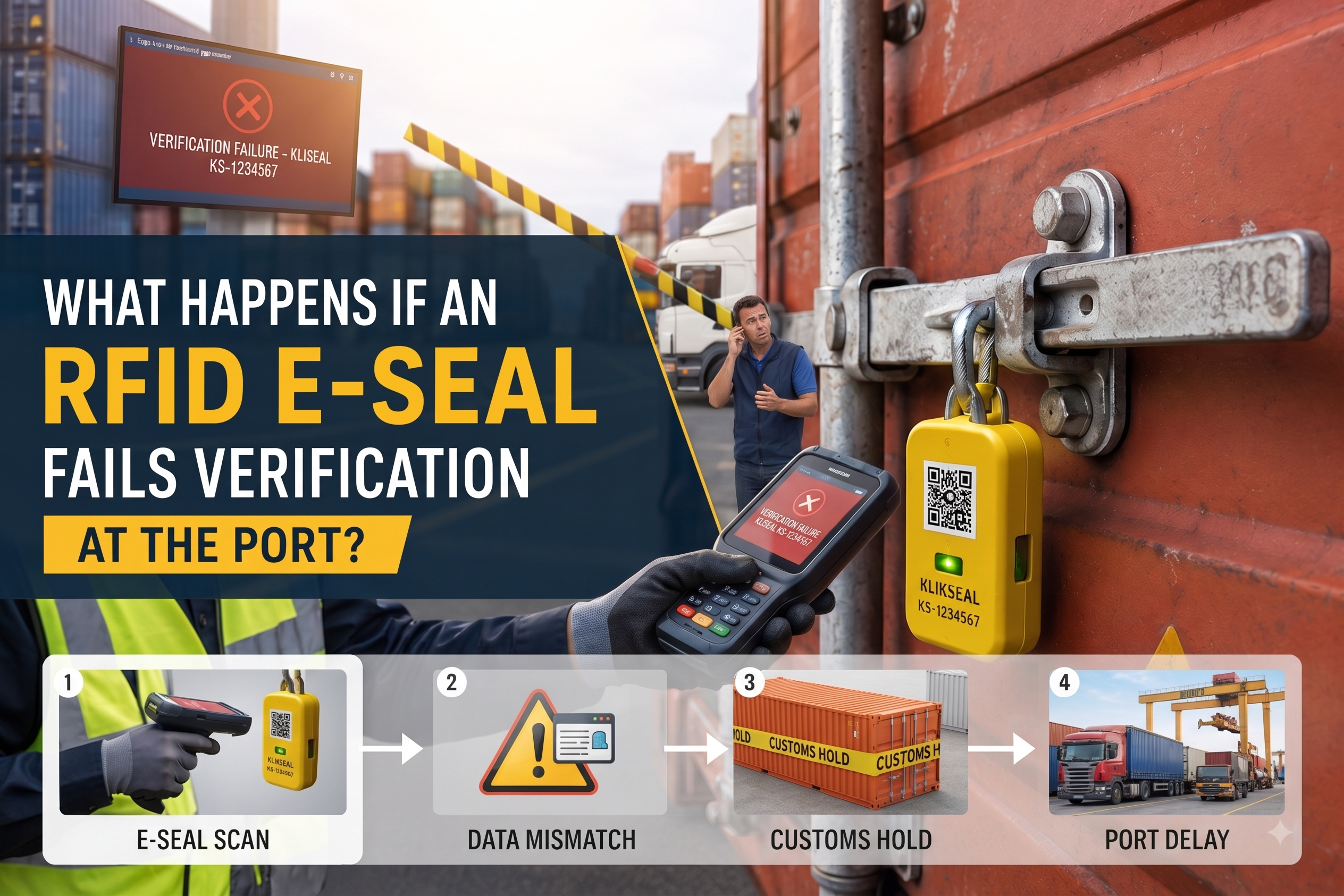

If an RFID e-seal fails verification at the port, the container may be stopped for additional checks instead of moving through the normal e-seal process. The next step depends on whether Customs finds tampering, a mismatch in seal or shipment details, or another verification error. In cases where tampering is confirmed, Customs examination may be required.
For exporters, the key point is simple: a failed verification does not always mean the cargo was tampered with. The reason behind the failure determines what happens next.
What Does Customs Check During RFID E-Seal Verification?
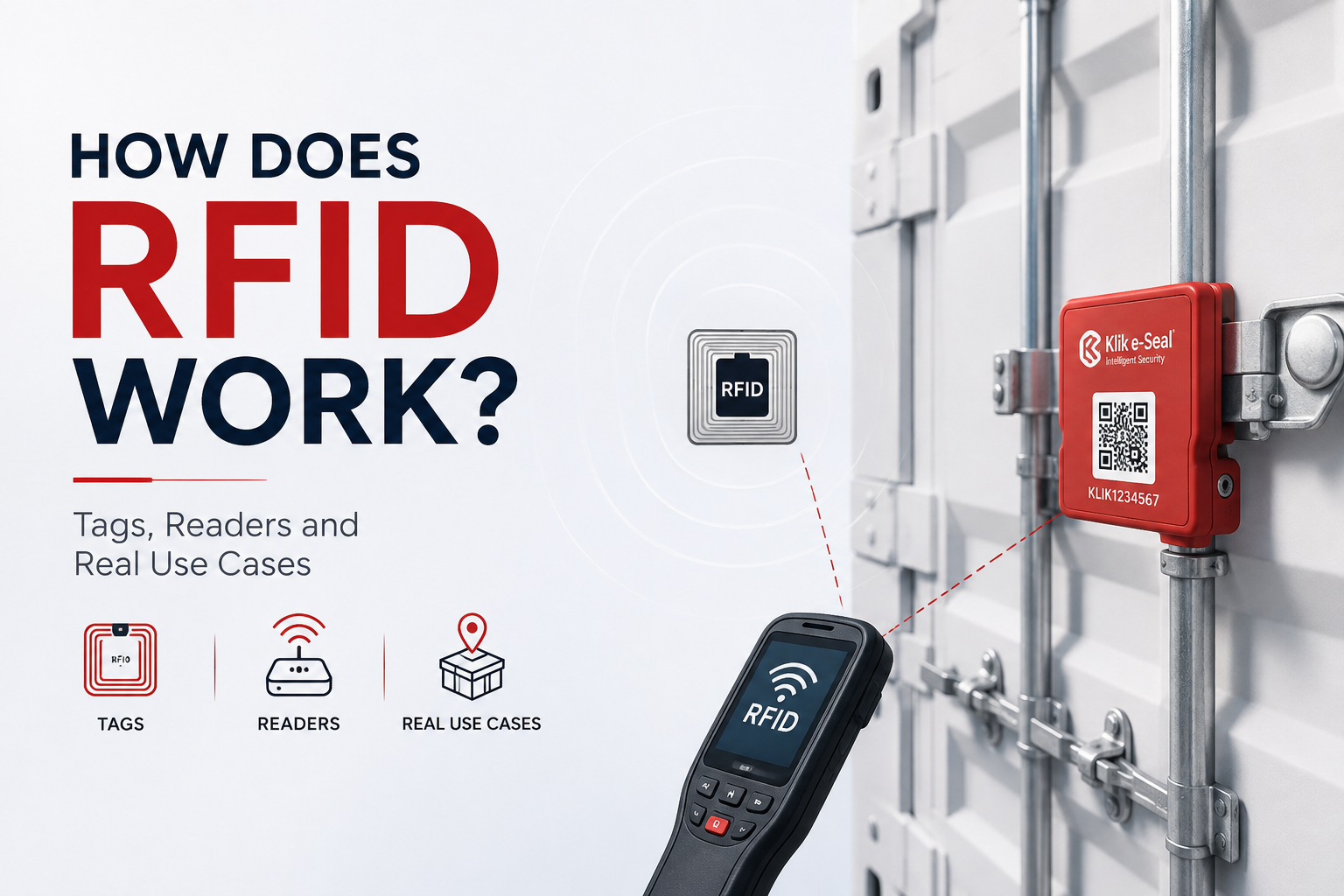
An RFID e-seal contains a unique electronic identity that can be read using an RFID reader or scanner. At the port or ICD, Customs can verify whether the seal is intact and whether its details correspond with the shipment records.
The information associated with an RFID e-seal can include the:
- Importer Exporter Code (IEC)
- Shipping Bill number and date
- E-seal number
- Date and time of sealing
- Destination Customs station
- Container number
- Trailer or truck number
The Indian Trade Portal states that Customs officers can use handheld or fixed readers to determine whether an e-seal is intact. When the seal reads as “NOT TAMPERED”, the export consignment can proceed through the established registration and Let Export Order process.
Note for exporters: An RFID e-seal is not simply a physical lock on the container. Its electronic data must correspond exactly with the shipment information submitted to Customs. A discrepancy in the electronic record is treated as a verification failure, even if the physical lock is untouched.
What Can Cause an RFID E-Seal to Fail Verification?
Not every verification problem has the same meaning. An exporter should distinguish between a seal that reports tampering and a seal that cannot be correctly matched or read.
The seal is detected as tampered
A tamper indication is the most serious type of verification problem because it suggests that the sealed condition may have been compromised.
Indian Customs guidance states that when an RFID seal affixed to a self-sealed container is found tampered, the container is subject to examination. After examination, movement of that container does not continue under the RFID e-seal procedure. The applicable Customs sealing process is used instead.
Seal or shipment data does not match
A container can also face problems when the information associated with the e-seal does not match the relevant shipment records.
For example, the issue could involve:
- An incorrect e-seal number
- A container number mismatch
- Incorrect shipment information
- Details that were not correctly recorded in the applicable system
This is different from a physical tampering finding. A mismatch tells Customs that the records need to be checked. It does not, by itself, establish that someone opened the container.
Some Customs procedures specifically provide for further examination where e-seal information does not match the relevant documents.
| Verification Problem | What It May Indicate | Likely Next Step |
|---|---|---|
| Tampered status detected | Physical seal compromise, tampering attempt, or sensor damage | Container stopped; moved to a CFS for open or 100% Customs examination |
| Seal or shipment data mismatch | Data entry typo, incorrect seal/container registration, or outdated shipping bill info | Consignment held; verification of records; possible CFS inspection if unresolved |
| RFID tag cannot be read | Antenna damage, reader malfunction, or extreme metallic/liquid interference | Manual physical verification of the seal by Customs officers; additional checks |
| Missing RFID e-seal | Failure to apply the seal, seal lost in transit, or non-compliance | Consignment subject to normal Risk Management System (RMS) treatment or supervised stuffing |
Note: This table is a general operational overview. Procedures can vary by port jurisdiction, shipping line, and specific customs guidelines.
The RFID seal cannot be read or verified
An RFID reader may also fail to obtain usable verification information. An unreadable seal should not automatically be described as a tampered seal.
The appropriate response depends on the port’s procedures and the reason the verification could not be completed. Customs may need to carry out additional checks before allowing the container to proceed.
The container arrives without the required RFID e-seal
A missing e-seal is another situation altogether.
Indian Customs guidance provides that full containers arriving at ports without RFID e-seals may be taken to a CFS or, where applicable, allowed direct port entry and subjected to the usual Risk Management System treatment.
What Happens After an RFID E-Seal Fails?
The exact process can vary by port, cargo type, and applicable Customs procedure. However, a verification problem can generally lead to the following sequence.
1. The container may be stopped for further checks
If Customs cannot establish the required seal integrity or match the relevant details, the container may not receive the normal benefit associated with an intact and properly verified RFID e-seal.
This does not mean every failed scan results in a long detention. It means the verification issue needs to be resolved before the shipment can continue under the applicable procedure.
2. The container may be moved for examination
Where Customs procedures require examination, the container may be directed to a designated examination location or CFS.
For example, Customs guidance covering RFID e-sealed export containers states that a tampered RFID seal is subject to examination.
3. Customs may conduct open examination
If the seal issue requires physical verification, Customs can examine the contents of the container.
The purpose is to establish whether the goods correspond with the declaration and to investigate the reason for the seal or documentation issue.
The extent of examination depends on the applicable Customs instructions and circumstances. In some procedures, a tampered seal can result in 100% examination.
4. The container may be resealed using another procedure
Once a container has been opened for examination, it may no longer continue under the original RFID e-seal process.
Indian Customs guidance states that after examination of a tampered RFID-sealed container, further movement is not to be carried out under the RFID e-seal procedure, with the existing Customs sealing system continuing for such movement.
This is one reason a seal verification issue can create additional handling and potentially delay cargo movement.
Does a Failed Verification Automatically Mean Cargo Was Tampered With?
No. This distinction matters.
A tampered result indicates a problem with the seal’s integrity. A data mismatch indicates that the electronic or shipment information does not correspond as expected. An unreadable seal means the RFID verification could not be completed normally.
These situations should not be treated as identical.
Customs procedures may require examination when a seal is found tampered, but a verification problem alone should not be presented as proof that cargo was physically opened or interfered with.
For exporters, the practical goal is to make sure the physical seal, electronic seal record, container details, and shipping documentation all agree before the container reaches the port.
How Can Exporters Prevent RFID E-Seal Verification Problems?
Most verification problems are easier to address before the container reaches the port. Choosing a reliable e-seal solution is the first step. Exporters should also use this pre-dispatch checklist:
- Confirm the e-seal number. Make sure the correct seal number is recorded against the shipment.
- Match the container number. Check that the container number in the e-seal data matches the shipping documentation.
- Verify shipment details. Review the Shipping Bill and other relevant information before dispatch.
- Apply the seal correctly. Ensure the e-seal is properly locked and physically secure.
- Check the seal before dispatch. Where the available system supports it, verify that the seal is readable and its status is correctly recorded.
- Keep verification records. Retain relevant seal and shipment information so discrepancies can be investigated quickly.
- Resolve mismatches early. Do not wait for the container to reach the port if an incorrect seal or shipment detail has already been identified.
The current Customs technology framework is also becoming more connected. In February 2026, ICEGATE issued an advisory for auto goods registration of e-sealed export cargo. The system uses universal e-seal scanning at the port to communicate container arrival to the CBIC system, while errors can be communicated to the exporter or Customs House Agent for correction or completion.
RFID E-Seal Verification at the Port: Quick Checklist
| Check | Why It Matters |
|---|---|
| E-seal number | Confirms the correct electronic seal is associated with the shipment |
| Container number | Prevents a mismatch between the seal record and container |
| Shipping Bill details | Helps Customs match shipment information |
| Physical seal condition | Helps identify visible damage or tampering |
| RFID readability | Confirms that the seal can be electronically verified |
| Shipment records | Helps resolve discrepancies before port arrival |
The simplest rule is this: the seal, the container, the shipment records, and the electronic data should all tell the same story.
Specifying RFID e-seals for your exports?
Klik eSeal is a CBIC-approved RFID e-seal manufacturer. Our seals comply fully with ISO 17712:2013 Clauses 4, 5, and 6 and ISO/IEC 18000-6 Class 1 Gen 2 standards, ensuring hassle-free clearance at over 10+ major Indian ports and ICDs.
Contact Klik eSeal for a QuoteFrequently Asked Questions
What happens if an RFID e-seal fails verification at the port?
The container may be stopped for additional verification. If Customs finds tampering, examination can be required. If the issue is a data mismatch or another verification problem, the appropriate corrective or examination procedure depends on the applicable port and Customs requirements.
Does a failed RFID e-seal verification mean the container was tampered with?
No. A failed verification can result from tampering, a data mismatch, or an inability to complete the RFID check. A tamper indication and a documentation or data mismatch are different situations and should not be treated as the same finding.
What happens if an RFID e-seal shows as tampered?
The container can be subjected to Customs examination. Under the applicable Indian Customs procedure, after examination, further movement may no longer take place under the RFID e-seal procedure and another Customs sealing process may be used.
What happens if an RFID e-seal cannot be scanned?
An inability to scan the seal does not automatically prove tampering. Customs may need to perform additional verification or follow the procedure applicable to the particular port and shipment before the container can proceed.
How can exporters avoid RFID e-seal verification failures?
Exporters should verify the e-seal number, container number, Shipping Bill information, physical seal condition, and available RFID verification data before dispatch. Keeping accurate records also makes it easier to resolve discrepancies.
What happens if a container reaches the port without an RFID e-seal?
Depending on the applicable procedure, the container may be taken to a CFS or allowed direct port entry and subjected to the usual Risk Management System treatment.
Final Takeaway
An RFID e-seal verification failure is a warning that something needs to be checked before the container can continue through the expected process. The consequences are very different depending on whether Customs identifies tampering, a data mismatch, an unreadable seal, or a missing e-seal.
For exporters, prevention starts before the truck leaves the stuffing location. Accurate e-seal data, matching container details, correct sealing, and proper records can reduce avoidable verification problems at the port.
Sources: Indian Trade Portal E-Seal FAQs; CBIC Circular No. 26/2017-Customs and subsequent advisories; ICEGATE Advisory on Auto Goods Registration of E-Sealed Export Cargo (February 2026); Mumbai Customs / Jawaharlal Nehru Custom House (JNCH) Public Notices; Cochin Customs Export Procedure Manual; ISO 17712:2013 Standards.