
Bolt seals are generally suited to standardised, high-security container applications, while cable seals offer greater flexibility for applications with different or irregular locking points. The right choice depends on your application, required security level, locking configuration, and compliance requirements.
When securing shipping containers, cargo, trucks, or industrial equipment, choosing the right security seal can make a significant difference. Two of the most commonly used options are bolt seals and cable seals. This guide compares both so you can make the right call for your operation.
Bolt Seal vs Cable Seal: At a Glance
| Feature | Bolt Seal | Cable Seal |
|---|---|---|
| Design | Rigid bolt and locking body | Flexible steel cable and locking body |
| Flexibility | Low | High |
| Security | High, depending on specification | High, depending on specification |
| Best suited for | Shipping containers | Containers, trucks, equipment and irregular applications |
| Locking points | Standardised | Variable |
| Installation | Simple | Simple and adaptable |
| Removal | Usually requires cutting tools | Usually requires cutting tools |
| Identification | Unique serial numbers available | Unique serial numbers available |
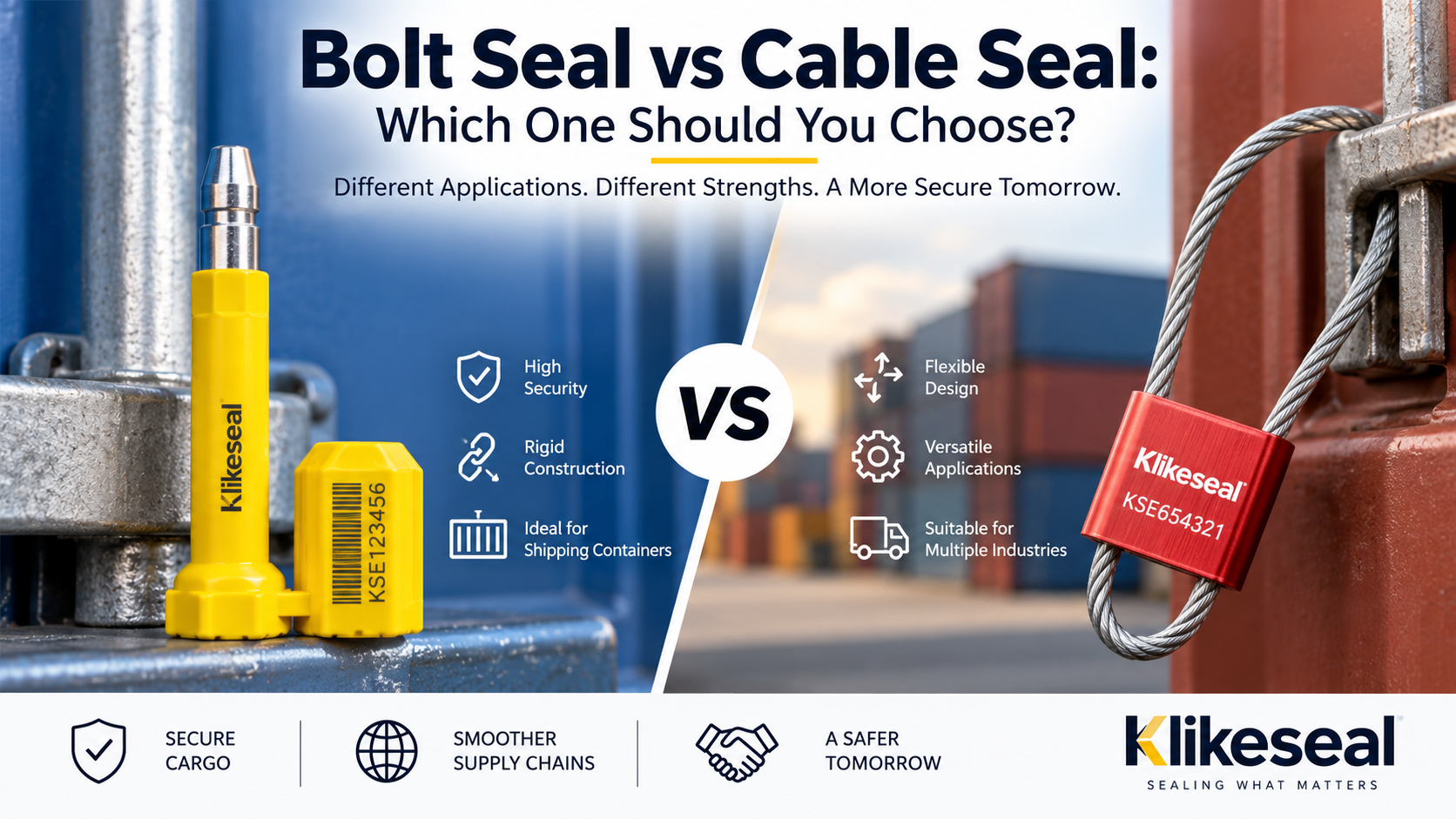
The biggest difference is simple: bolt seals prioritise rigid physical security, while cable seals prioritise flexibility and adaptability.
What Is a Bolt Seal?
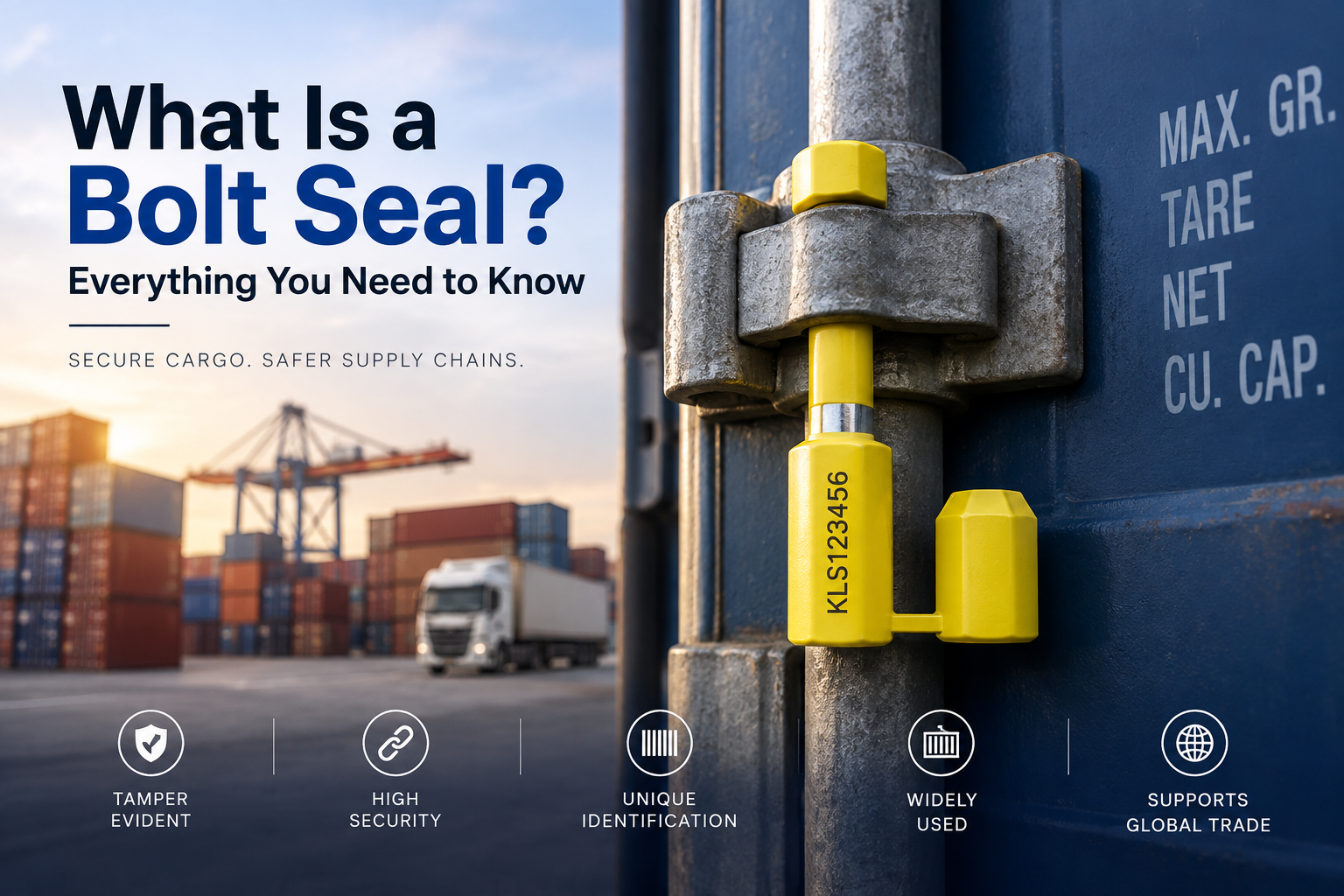
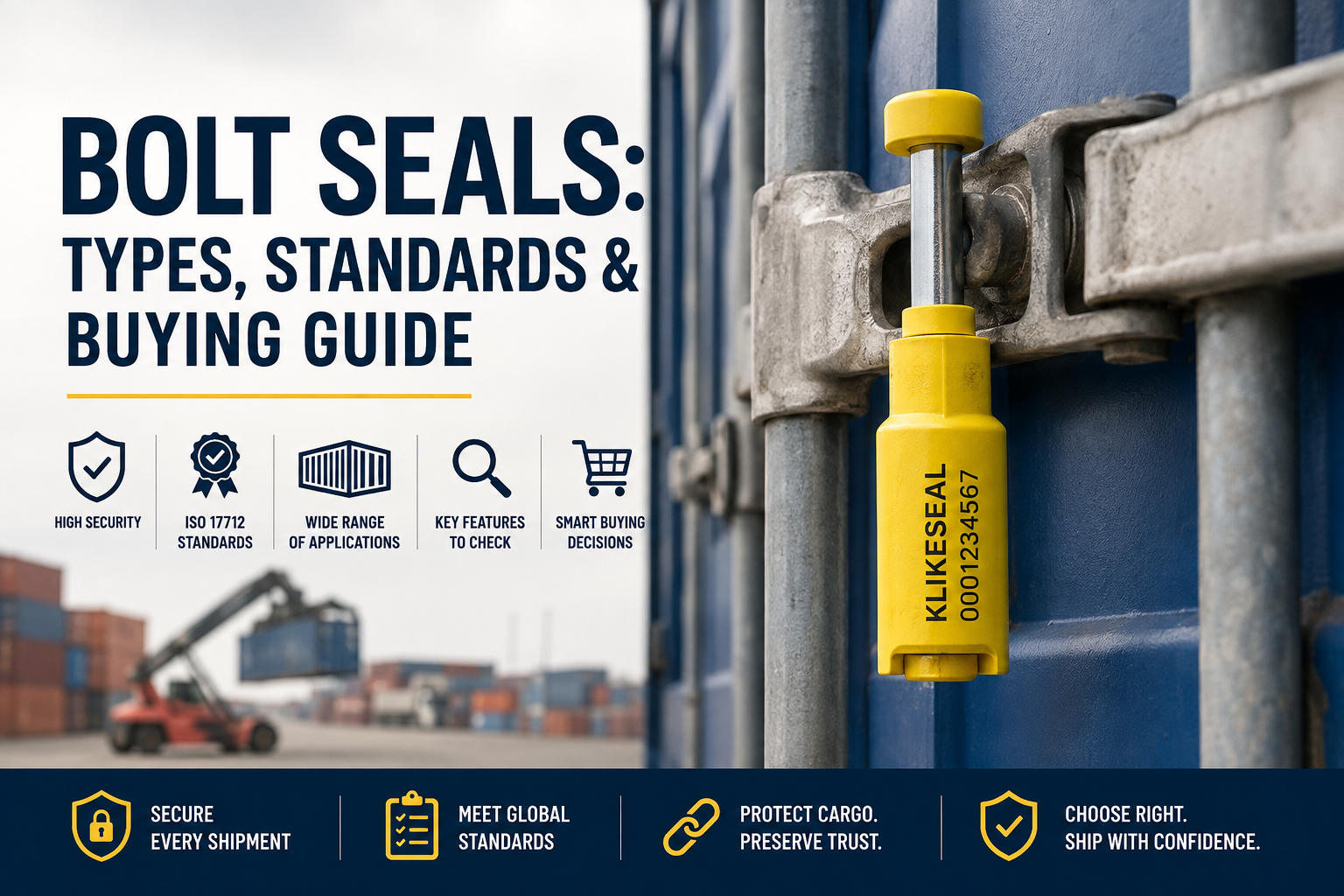
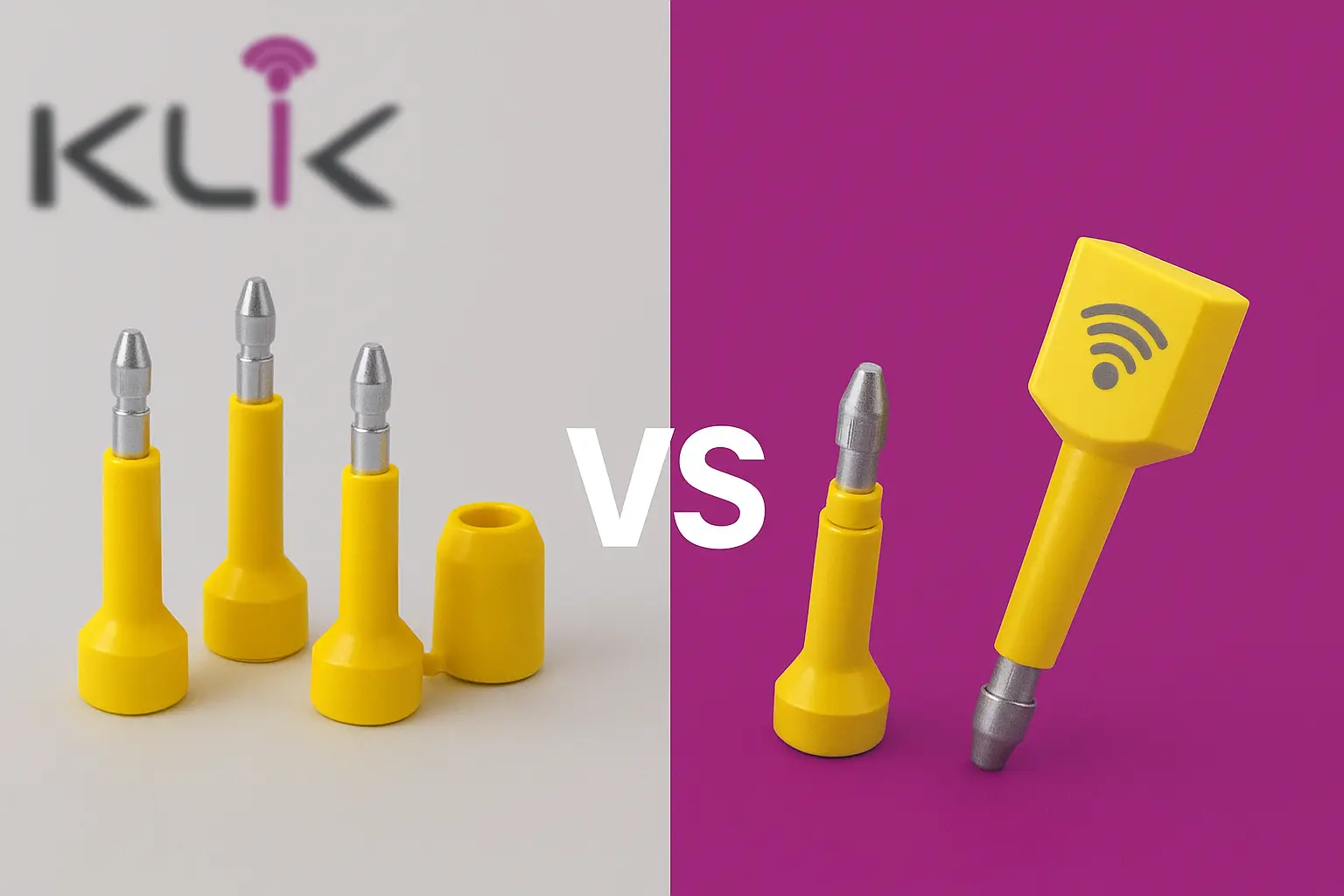
A bolt seal is a high-security seal consisting of a solid metal bolt and a locking body. Once the bolt is inserted and locked, the seal is designed to resist tampering and unauthorised removal.
Bolt seals are particularly common in shipping and logistics because standard shipping containers have predefined locking points that work well with this type of seal.
How Does a Bolt Seal Work?
The bolt is inserted through the designated locking holes on a container door. The locking mechanism holds the bolt in place and creates a tamper-evident barrier. Once installed, the seal can be visually inspected and its unique identification number recorded for tracking. Removing a high-security bolt seal generally requires cutting equipment rather than simply unlocking it.
Where Are Bolt Seals Used?
- Shipping containers
- International cargo transportation
- Ports and terminals
- Freight and logistics operations
- Warehouses and distribution centres
- High-value cargo
For standardised container applications, a bolt seal is often the straightforward choice because its rigid construction matches the locking system of the container.
What Is a Cable Seal?
A cable seal uses a flexible steel cable combined with a locking mechanism. Unlike a rigid bolt, the cable can be passed through different locking points, making it useful when the application does not have a standardised configuration. This flexibility is one of the main reasons businesses choose cable seals.
How Does a Cable Seal Work?
The cable is passed through the required locking points and secured using the locking body. Depending on the product design, cable length and configuration can vary. Once installed, the seal provides evidence of unauthorised access if the cable or locking mechanism has been damaged or cut.
Where Are Cable Seals Used?
- Trucks and trailers
- Shipping containers
- Cargo transportation
- Valves and industrial equipment
- Utility applications
- Machinery and other assets with irregular locking points
Their adaptable design makes them particularly useful when a rigid bolt seal is difficult to install.
Bolt Seal vs Cable Seal: Which Is More Secure?
This is where buyers need to be careful. It would be misleading to say that every bolt seal is more secure than every cable seal. Security depends on the individual product’s construction, materials, locking mechanism, tamper resistance, and applicable certification.
A high-security bolt seal can provide excellent protection for container doors. A properly designed high-security cable seal can also provide strong protection where flexibility is required. For regulated or high-security applications, buyers should look beyond the product name and check the seal’s specifications and relevant standards — such as ISO 17712 for mechanical freight container seals.
When Should You Choose a Bolt Seal?
A bolt seal is usually the better option when you are securing a standardised shipping container and want a rigid, high-security sealing solution.
Choose a bolt seal when:
- The locking points are standardised.
- The container is being transported through a logistics or international supply chain.
- Physical security is a major priority.
- You want a rigid seal that is easy to visually inspect.
- The application is compatible with a bolt-style locking mechanism.
Example: A freight company securing a standard shipping container before it leaves a port would typically benefit from a bolt seal because the container already has dedicated locking points designed for this type of application.
When Should You Choose a Cable Seal?
A cable seal becomes more attractive when flexibility is more important than having a rigid locking mechanism.
Choose a cable seal when:
- Locking points vary between applications.
- The opening or equipment has an irregular configuration.
- You need to pass the seal through multiple points.
- You are securing trucks, trailers, equipment, valves, or other assets.
- Installation flexibility is important.
Example: An industrial facility securing equipment with differently positioned locking points may find a cable seal easier to install than a rigid bolt seal.
Bolt Seal vs Cable Seal: Pros and Cons
Bolt Seal — Advantages
- Rigid construction
- Well suited to shipping containers
- High tamper resistance when properly specified
- Simple visual identification
- Suitable for high-security applications
Bolt Seal — Limitations
- Less flexible than a cable seal
- Requires compatible locking holes
- Not ideal for irregular locking configurations
Cable Seal — Advantages
- Flexible steel cable
- Adaptable to different locking points
- Suitable for irregular applications
- Useful across multiple industries
- Easy to adapt to different configurations
Cable Seal — Limitations
- Security performance varies by product design
- May be less convenient for standardised container doors
- Requires appropriate cable and locking specifications
How to Choose Between a Bolt Seal and a Cable Seal
Before purchasing, consider these six factors:
1. Application
Start with what you are actually securing. A shipping container, truck, valve, warehouse asset, and industrial machine may all require different sealing solutions.
2. Security Requirement
Determine how resistant the seal needs to be against unauthorised access and tampering. Not all applications require the same level of protection.
3. Locking Configuration
If the locking points are fixed and standardised, a bolt seal may be appropriate. If they vary, a cable seal may provide more flexibility.
4. Certification and Standards
For high-security cargo applications, check whether the seal meets the standards required for your operation. ISO 17712 is particularly relevant when evaluating high-security mechanical seals for freight containers. Do not rely solely on the term “high security” in a product description — verify the actual specifications and certification.
5. Traceability
Unique serial numbers, barcodes, or other identification methods can help businesses record which seal was applied to which shipment or asset, supporting chain-of-custody documentation.
6. Operational Convenience
Consider how quickly the seal needs to be installed, inspected, recorded, and removed. A seal that looks excellent on paper may not be the best operational choice if it does not suit your workflow.
Quick Decision Guide
Choose a bolt seal when you need a rigid, high-security solution for standardised shipping containers and compatible locking points.
Choose a cable seal when flexibility, adaptability, and irregular locking configurations are more important. The better security seal is the one that matches the physical application and security requirement — not simply the product with the strongest-sounding specification.
Why Choose the Right Security Seal Manufacturer?
The quality of the seal matters just as much as choosing the correct seal type. A reliable security seal manufacturer should be able to provide:
- Consistent product quality
- Appropriate security specifications
- Tamper-evident designs
- Unique identification and numbering
- Relevant certification where required
- Customisation options
- Reliable supply for bulk requirements
For businesses handling large volumes of cargo, choosing a manufacturer that understands the operational requirements of logistics and supply-chain security can help ensure that seals perform consistently across shipments.
Not sure which seal is right for your operation?
Klik eSeal supplies ISO 17712 High-Security bolt seals and cable seals for containers, trucks, trailers, and industrial applications — with unique numbering and bulk supply capability.
Request a Klik eSeal QuoteFrequently Asked Questions
Is a bolt seal more secure than a cable seal?
Not necessarily. Security depends on the individual seal’s construction, locking mechanism, materials, specifications, and certification. Bolt seals are particularly well suited to standardised container applications, while cable seals provide greater flexibility for irregular locking configurations.
Are bolt seals suitable for shipping containers?
Yes. Bolt seals are widely used on shipping containers because their rigid design works with standardised container locking points. They are a common choice in international cargo and logistics operations.
What are cable seals used for?
Cable seals are used for cargo, containers, trucks, trailers, industrial equipment, valves, utilities, and other applications where a flexible sealing mechanism is needed — particularly when locking points are irregular or non-standardised.
Are bolt seals and cable seals reusable?
Most high-security bolt and cable seals are designed for one-time use and must be removed by cutting or otherwise destroying the seal. Always check the manufacturer’s specifications for the specific product.
Do bolt seals comply with ISO 17712?
Some bolt seals are manufactured and certified to applicable ISO 17712 requirements, but not every bolt seal automatically complies with the standard. Certification should be verified for the specific product rather than assumed from the product category.
Can security seals be customised with serial numbers?
Yes. Many security seals can be supplied with unique serial numbers, barcodes, logos, or other identification features depending on the manufacturer’s capabilities. This supports traceability and chain-of-custody documentation.
Which seal is better for international cargo transportation?
For standard shipping containers, a suitable high-security bolt seal is often the preferred option. However, the final choice should be based on the container design, security requirements, and applicable regulations or standards — including ISO 17712 where relevant.
Final Verdict
Bolt seals and cable seals solve different security challenges. If you are securing a standard shipping container and need a rigid, high-security solution, a bolt seal is usually the logical choice. If your application requires greater flexibility or has irregular locking points, a cable seal may be the better fit.
Before making the final decision, evaluate the application, security requirement, locking configuration, certification, traceability, and operational requirements. Choosing the right seal is less about picking the “strongest” option and more about choosing the right security solution for the job.
Sources: ISO 17712:2013 (confirmed December 2023); World Customs Organization (WCO) Safe Framework of Standards.