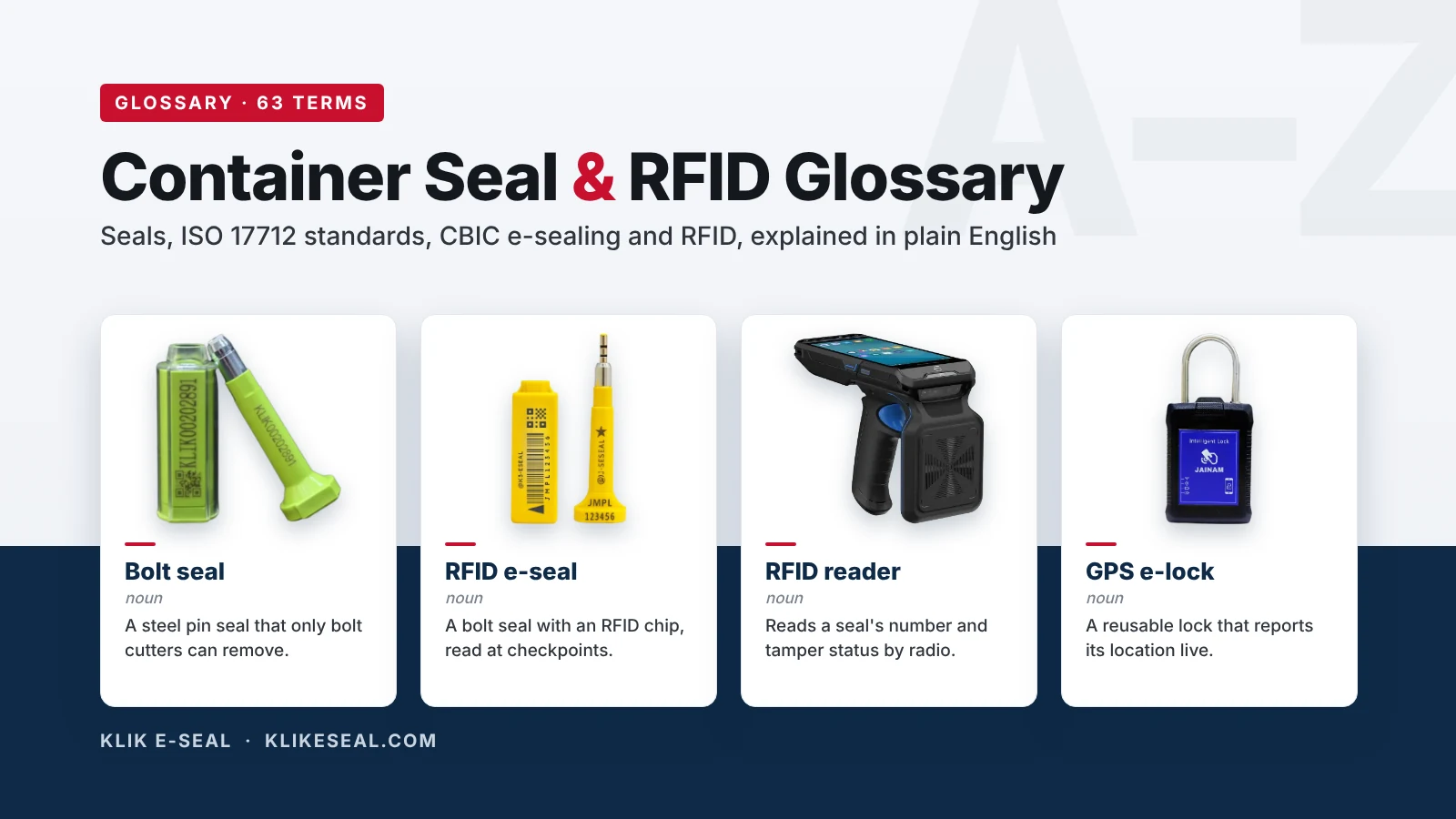

A container seal glossary is a quick reference for the words buyers, shippers and customs teams use when they talk about sealing cargo. This one covers the mechanical seal terms, the standards behind them, and the RFID and electronic terms that now appear on almost every e-seal quote.
Each term gets a short, plain definition. Where a topic needs more space, we link to a full guide.
Key Takeaways
- 63 terms in three groups: container seal terms, standards and compliance terms, and RFID and electronic seal terms.
- ISO 17712:2013 grades mechanical seals as I (indicative), S (security) or H (high security).
- An H class seal must pass both the strength tests and Clause 6, so ask suppliers for both reports.
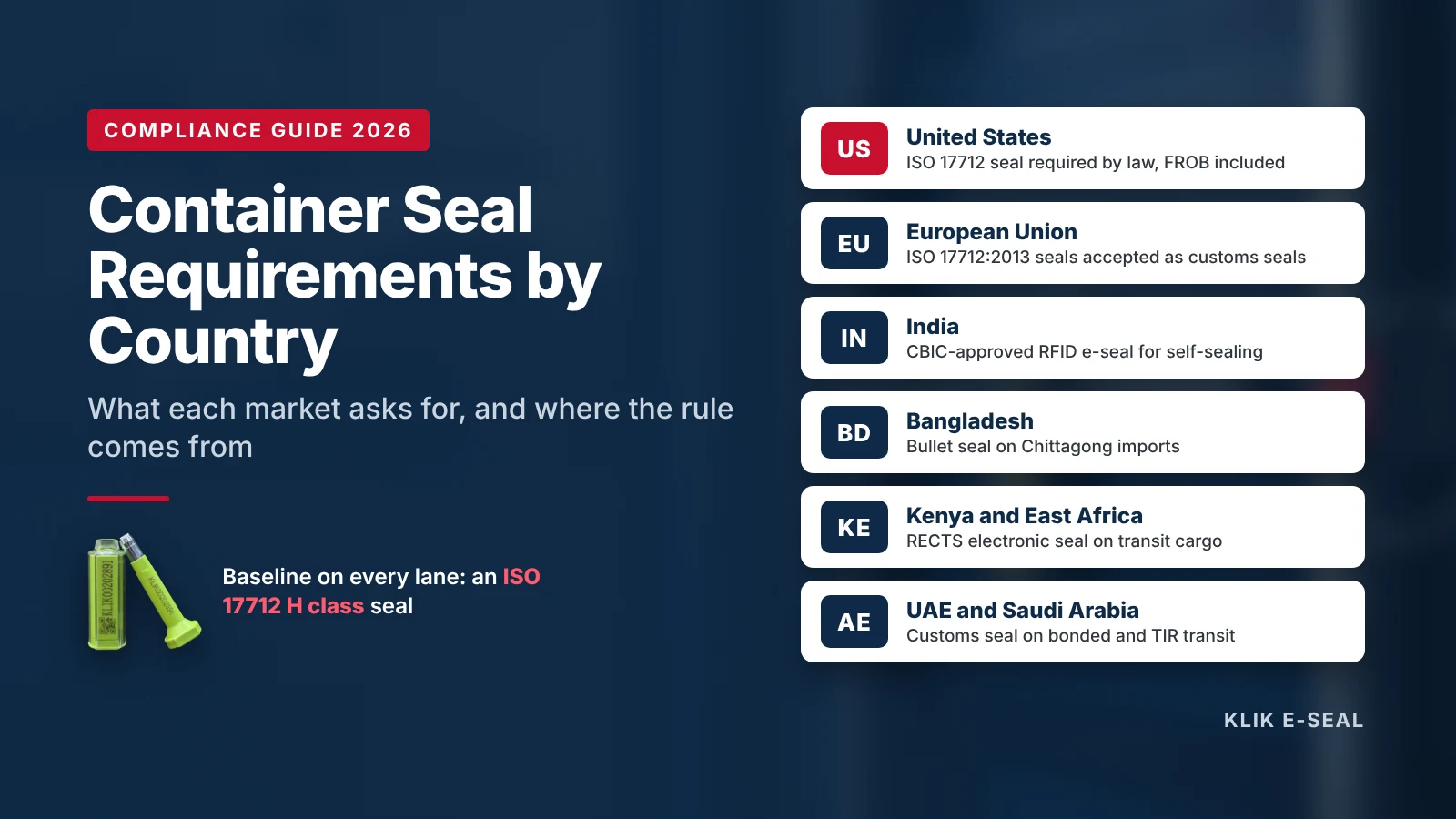
- Indian exporters who self-seal must use CBIC-approved RFID e-seals and declare the seal number on the Shipping Bill.
- Passive RFID seals are read at checkpoints; only a GPS e-lock gives live location.
How to Use This Glossary
Terms are grouped into three sections so related words sit together:
- Container seal terms: the hardware and the everyday sealing process.
- Standards and compliance terms: the rules that decide which seal you can use.
- RFID and electronic seal terms: the technology inside e-seals, readers and GPS locks.
Inside each section, terms are listed A to Z.
- Container Seal Terms→
- Standards and Compliance→
- RFID and E-Seals
Container Seal Terms
Anti-spin
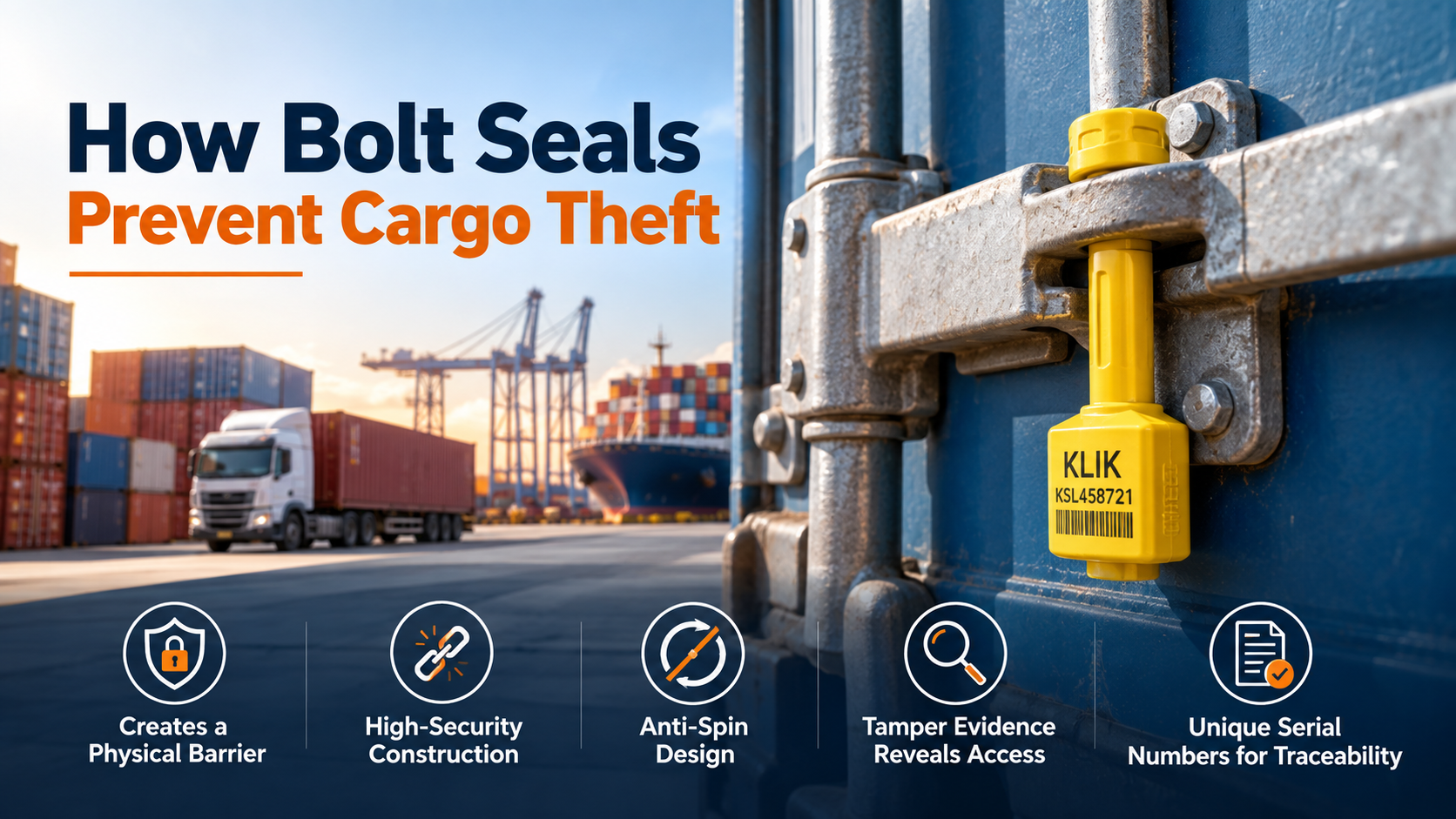
A design feature on bolt seals that stops the pin from rotating once locked. A pin that spins freely is easier to manipulate, so anti-spin makes tampering harder to hide.
Barrier seal
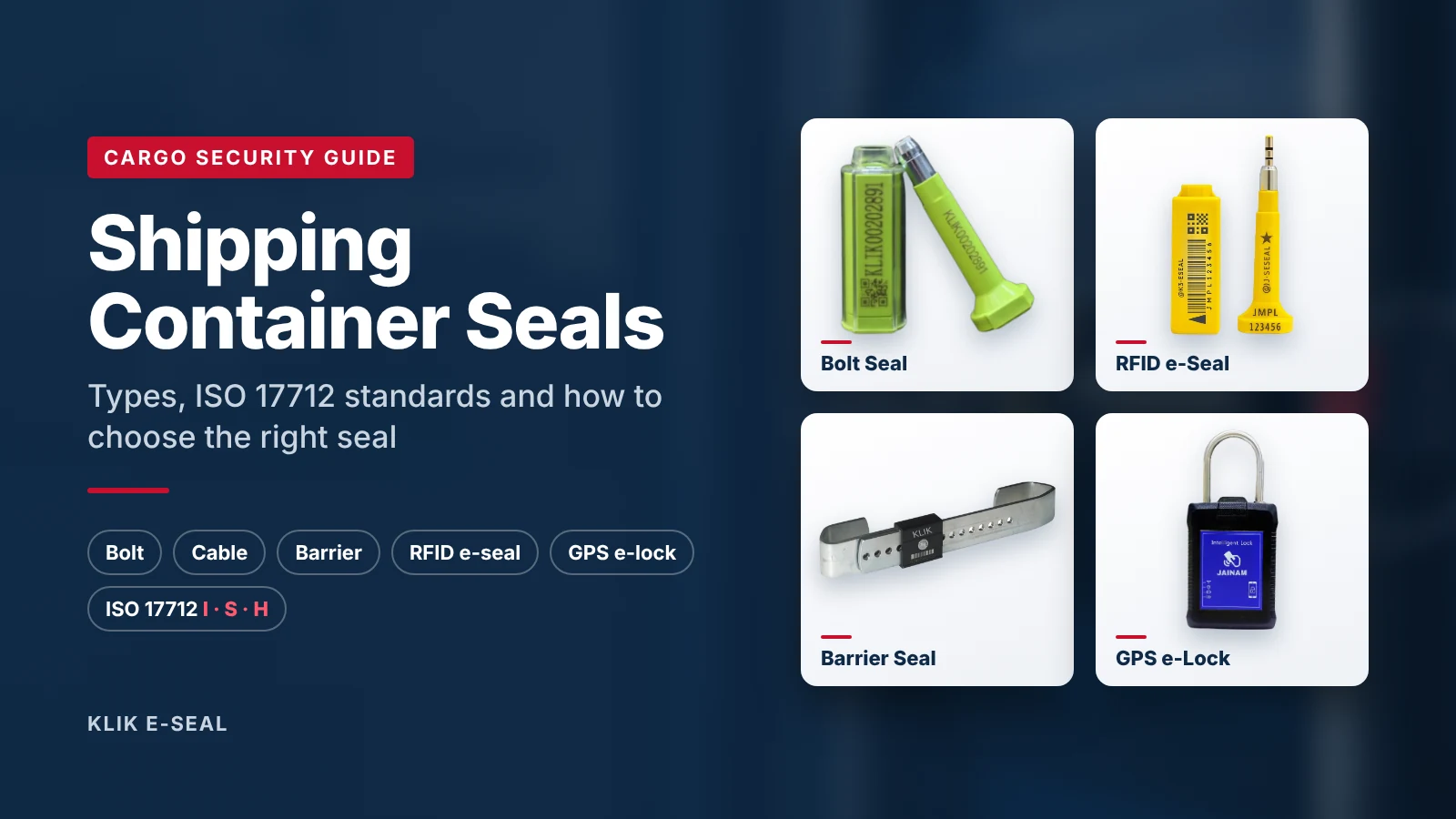
A heavy steel bar that locks across a container’s vertical door bars. It works as both a seal and a physical barrier. See what a barrier seal is and how to check it meets shipping standards.
Bill of lading (B/L)
The main shipping document issued by the carrier. The container seal number is recorded on it, which is how the receiver confirms the seal on arrival is the one fitted at loading.
Bolt seal
A steel pin that pushes into a locking barrel and clicks shut. It can only be removed with bolt cutters and is the most common seal on loaded ocean containers. Our guide to what a bolt seal is covers it in detail.
Bottle seal (bullet seal)
Common trade names for a bolt seal, used widely in India and South Asia. Indian customs’ e-sealing FAQ describes RFID e-seals as designed like the conventional bolt seal, or bottle seal.
Cable seal
A steel cable threaded through the locking points and pulled tight through a locking body. Thin cables are lower security; heavier designs can reach high security. Compare the two main types in bolt seal vs cable seal.
Cam and locking bar
The vertical steel bars on container doors and the cams that hold them shut. Seals are fitted through the locking handle or cam keeper on the right-hand door.
Container number
The unique code painted on every shipping container, set by ISO 6346: a four-letter owner and category code, six digits and a check digit. It is recorded alongside the seal number.
Customs seal
A seal applied by a customs officer, usually after an inspection. When customs replaces the original seal, the new number must be passed to the consignee so the paperwork still matches.
Full container load (FCL)
A container filled by one shipper. FCL containers are sealed by the shipper right after loading, which is why seal choice sits with the exporter.
ICD and CFS
An Inland Container Depot is a dry port where containers are stuffed, cleared and moved by rail or road. A Container Freight Station is a bonded yard for stuffing, examination and LCL cargo. In India, full containers that reach the port without a required RFID e-seal can be routed to a CFS for checks.
Indicative seal
A light seal, often plastic, that breaks by hand. It shows that something was opened but offers almost no resistance. Used on warehouse doors, empties and internal transfers.
Liner seal
A seal issued by the shipping line, usually handed over with the empty container. In India, a July 2026 instruction to SEZ units noted that liner seals do not replace customs-prescribed sealing, such as CBIC RFID e-seals, unless a procedure recognises them.
Meter seal
A small twist or wire seal used on utility meters and instruments to show whether they were opened. It is not meant for containers.
Padlock seal
A plastic or metal seal shaped like a padlock, used on lighter doors, bags and equipment. Most are indicative grade.
Plastic pull-tight seal
A one-piece plastic strap that locks when pulled through its head. Fast to apply and cheap, but indicative only.
Seal discrepancy
Any mismatch between the physical seal and the records: a different number, a damaged seal or a missing one. The container should not be opened until the discrepancy is reported. If a seal gets damaged on the way, see what to do with a damaged container seal during transit.
Seal log
A register of every seal received, issued and used, with numbers, dates and names. C-TPAT members are required to keep one.
Seal number
The unique number printed or laser-marked on each seal, often with a barcode or QR code. No two seals from a properly controlled supplier share a number.
Seven-point container inspection
A check of an empty container before loading: front wall, left side, right side, floor, ceiling or roof, inside and outside doors, and the outside and undercarriage. It makes sure nothing is hidden in the box before the seal goes on.
Shipping Bill
The export declaration filed with Indian customs. Under the self-sealing procedure, the e-seal’s serial number must be declared on the Shipping Bill.
Stuffing
Loading cargo into a container. The seal should be fitted immediately after stuffing is finished.
Tamper evidence
The ability of a seal to show clear, lasting signs when someone has tried to open or remove it. Every container seal is tamper-evident; none is truly tamper-proof.
VVTT
The seal check taught by US Customs and Border Protection: View the seal and locking hardware, Verify the number against the paperwork, Twist the seal, and Tug it. Used when fitting a seal and again before cutting it.
Standards and Compliance Terms
AEO (Authorised Economic Operator)
A trusted-trader status granted by customs authorities under the WCO SAFE Framework. AEO companies get faster clearance in return for meeting security rules, which include seal controls.
Annex A (ISO 17712)
The part of ISO 17712 that lists the security practices a seal manufacturer must follow, such as controlling seal numbers and restricting access to production and storage areas. Manufacturers are audited against it.
CBIC-approved RFID e-seal
In India, exporters who self-seal containers at their own premises must use RFID e-seals bought from vendors approved by the Central Board of Indirect Taxes and Customs (CBIC). The rules sit in CBIC circulars 26/2017, 36/2017 and 41/2017-Customs. Our guide to CBIC-approved RFID e-seal vendors explains the process.
C-TPAT
The Customs Trade Partnership Against Terrorism, a US Customs and Border Protection programme. Members must fit an ISO 17712 high security seal to loaded US-bound containers right after stuffing.
Clause 6 (evidence of tampering)
The section of ISO 17712 that covers how clearly a seal shows tampering. An H class seal must pass both the strength tests and Clause 6, so ask your supplier for both reports, not just the strength result.
E-seal data
In India, the details an exporter uploads against each RFID e-seal through the vendor’s app before sealing: IEC, Shipping Bill number and date, e-seal number, date and time of sealing, destination customs station, container number and trailer or truck number. Once uploaded, the data cannot be edited.
High security seal (H class)
The top class under ISO 17712. An H class seal needs bolt cutters or a cable cutter to remove and is the class expected on loaded international containers. You will see an “H” marked on the seal.
ISO 17712
The international standard for mechanical freight container seals. ISO 17712:2013 is the current edition; ISO last reviewed and confirmed it in 2023. It grades seals as I, S or H based on tensile, shear, bending and impact tests, plus tamper-evidence checks.
ISO/IEC 17025
The standard for testing laboratories. ISO 17712 seal tests must be done by a lab accredited to ISO/IEC 17025, so ask your supplier for that lab’s test report.
ISO 18185
The series of standards for electronic container seals. It defines an e-seal as a one-time seal that also meets the ISO 17712 high security class.
Let Export Order (LEO)
The permission Indian customs gives once an export shipment is cleared. After LEO, the container can be loaded onto the vessel.
PIP (Partners in Protection)
The Canada Border Services Agency’s trusted-trader programme. Loaded containers and trailers must carry a high security seal before crossing into Canada, and businesses are told to keep the seal maker’s independent lab test report on file.
Security seal (S class)
The middle class under ISO 17712. It needs a simple tool, such as a cutter, to remove.
Self-sealing
An Indian customs procedure that lets approved exporters seal full container loads at their own premises instead of under officer supervision, using CBIC-approved RFID e-seals.
WCO SAFE Framework
The World Customs Organization’s framework of standards for securing and easing global trade. Most national AEO programmes are built on it.
Ask for the reports, not just the letter H. An H class seal must pass both the ISO 17712 strength tests and Clause 6, at a lab accredited to ISO/IEC 17025.
Need Seals That Meet ISO 17712 and CBIC Rules?
Klik e-Seal makes high security seals, CBIC-approved RFID e-seals, UHF RFID readers and GPS e-locks for sea, road and rail.
Request a QuoteRFID and Electronic Seal Terms
3-state RFID seal
An RFID seal whose chip records one of three states: unlocked, locked or tampered. A reader shows the current state when it scans the seal.
Active RFID tag
An RFID tag with its own battery and transmitter. It can send its signal over long distances but costs more and needs battery replacement or recharging.
Antenna
The part of a tag or reader that sends and receives radio signals. In a tag, the antenna also collects the energy that powers a passive chip.
Anti-collision
The method a reader uses to read many tags in its field at once without their replies interfering. It is why one reader can check a stack of seals in seconds.
Backscatter
How a passive UHF tag replies. It reflects part of the reader’s signal back, changing it slightly to carry its data, which is why a passive tag needs no transmitter of its own.
Battery-assisted passive (BAP)
A tag with a small battery that powers its chip but still replies by reflecting the reader’s signal. It sits between passive and active tags on range and cost.
EPC (Electronic Product Code)
A GS1 data standard for the unique identifier stored on a UHF RFID tag, so different companies’ systems can read the same code.
EPC Gen2 (ISO/IEC 18000-63)
The standard that sets how passive UHF tags and readers talk to each other. Also known as RAIN RFID. UHF RFID seals typically follow it.
GNSS
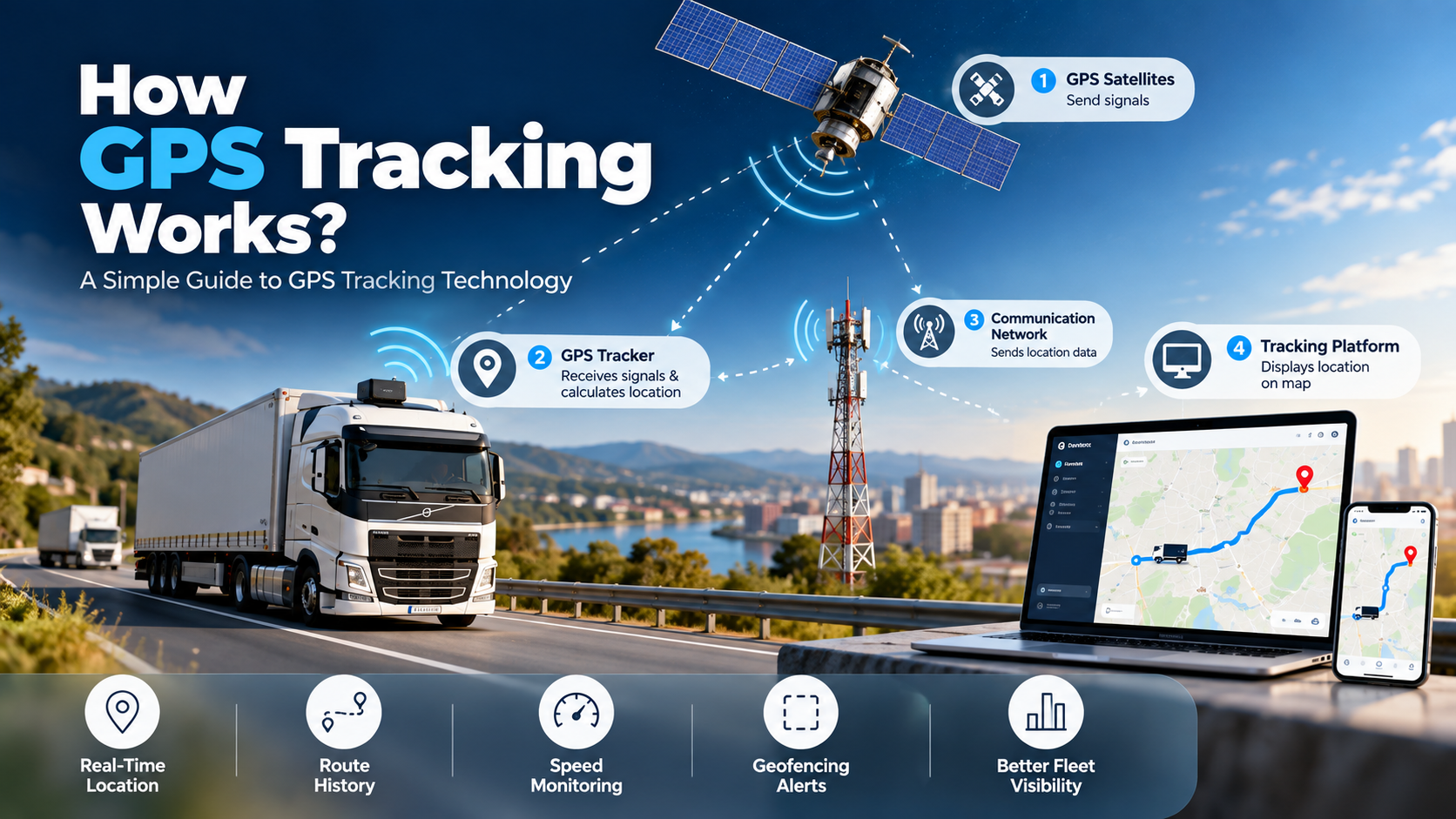
Global navigation satellite systems, the family that includes GPS, GLONASS, Galileo, BeiDou and India’s NavIC. A GNSS lock can use more than one system for a more reliable position fix.
Geofence
A virtual boundary drawn on a map. A GPS e-lock with geofencing sends an alert when the container enters or leaves that area.
GPS e-lock
A reusable, battery-powered electronic lock that reports its location and sends an alert if it is opened. Unlike an RFID seal, it gives live tracking between checkpoints. See our GPS container lock.
HF (High Frequency)
RFID at 13.56 MHz, with a short read range of about a metre or less. Used for access cards, ticketing and NFC.
Inlay
The chip and antenna mounted together on a thin film. It is the working part inside an RFID label, tag or seal.
LF (Low Frequency)
RFID at 125 to 134 kHz. Very short range, but it works well near water and metal. Used for animal tags and access fobs.
Middleware
Software that sits between RFID readers and business systems. It filters duplicate reads and passes clean data to a WMS, an ERP or a customs portal.
NFC (Near Field Communication)
A type of HF RFID at 13.56 MHz that works over a few centimetres. Most smartphones can read NFC tags.
Passive RFID tag
A tag with no battery. It powers its chip with energy from the reader’s signal. Passive tags only share data when a reader scans them, so they cannot report a live location.
Read range
The distance at which a reader can reliably read a tag. It depends on the frequency, the tag, the reader’s power and what surrounds the tag, especially metal and liquids.
RFID (Radio Frequency Identification)
A way of identifying objects with radio waves, using a tag (also called a transponder) and a reader (also called an interrogator), without contact or line of sight. Our guide to how RFID works walks through a full read cycle.
RFID e-seal
A bolt or cable seal with an RFID chip inside. A reader picks up the seal number and tamper status, so checks are faster and no one keys in numbers by hand. See our RFID bolt seal.
RFID reader
The device that sends the radio signal and decodes the tag’s reply. Readers can be fixed at gates, handheld, or mobile. More in what RFID readers are and how they are used.
TID (Tag Identifier)
A memory area on a Gen2 chip that holds a unique, factory-set chip ID. Unlike the EPC, it normally cannot be rewritten, which helps prove a tag is genuine.
UHF (Ultra High Frequency)
RFID in the 860 to 960 MHz range, with longer read ranges and fast bulk reading. The exact band allowed differs by country. Many RFID container seals use UHF. GS1 explains the LF, HF and UHF bands.
User memory
An optional writable memory area on some Gen2 chips, used to store extra data such as a shipment or asset reference.
Passive RFID is not live tracking. A passive RFID seal shares data only when a reader scans it. Live location between checkpoints needs a GPS e-lock.
Terms Buyers Often Mix Up
| Often Confused | What Actually Differs |
|---|---|
| Tamper-evident vs tamper-proof | Tamper-evident shows that someone interfered. No seal is tamper-proof. |
| Seal vs lock | A seal proves whether doors were opened. A lock is built to stop entry. |
| RFID e-seal vs GPS e-lock | An RFID e-seal is read at checkpoints. A GPS e-lock reports location live. |
| Passive vs active tag | Passive has no battery and needs a reader nearby. Active has a battery and transmits on its own. |
| Indicative vs high security | Indicative breaks by hand. High security (H class) needs bolt cutters. |
| Seal number vs container number | The seal number identifies the seal. The container number (ISO 6346) identifies the box. |
Need Seals That Match These Standards?
We design and make security seals in India, including high security seals, RFID e-seals, UHF RFID readers and GPS e-locks. Our high security bolt seals are made to ISO 17712:2013, and we are a CBIC-approved RFID e-seal vendor for Indian exporters.
Tell us your lanes, cargo and monthly volume, and we will suggest the right seal. Request a quote.
Frequently Asked Questions
What is the difference between a container seal and a lock?
A container seal is a one-time device that proves whether the doors were opened. A lock is designed to stop entry and can usually be reused. A GPS e-lock combines a lock with electronic alerts.
What does H mean on a container seal?
H marks a high security seal under ISO 17712. The seal model passed the standard’s strength and tamper-evidence tests at an accredited lab and needs bolt cutters or a cable cutter to remove.
Can an RFID seal track a container in real time?
No. Most RFID seals are passive and share data only when a reader scans them. India’s customs e-sealing FAQ also states that e-seals are not GPS enabled. For live location between checkpoints, you need a GPS e-lock.
What frequency do RFID container seals use?
Many RFID container e-seals, including our RFID bolt seal, use passive UHF in the 860 to 960 MHz range, because it gives longer read ranges and fast bulk reading at gates.
Who issues the container seal number?
The seal manufacturer prints or laser-marks a unique number on each seal. The shipper records it on the bill of lading and shipping documents when the seal is fitted.
Final Thoughts
Most sealing problems at ports start with a misunderstanding: a seal bought as “high security” that carries no H class report, or an RFID seal expected to track a container it can only identify.
Knowing the terms lets you ask suppliers the right questions and read their answers properly. If you want to go from definitions to choosing a seal, start with our guide to shipping container seals types, standards and how to choose.