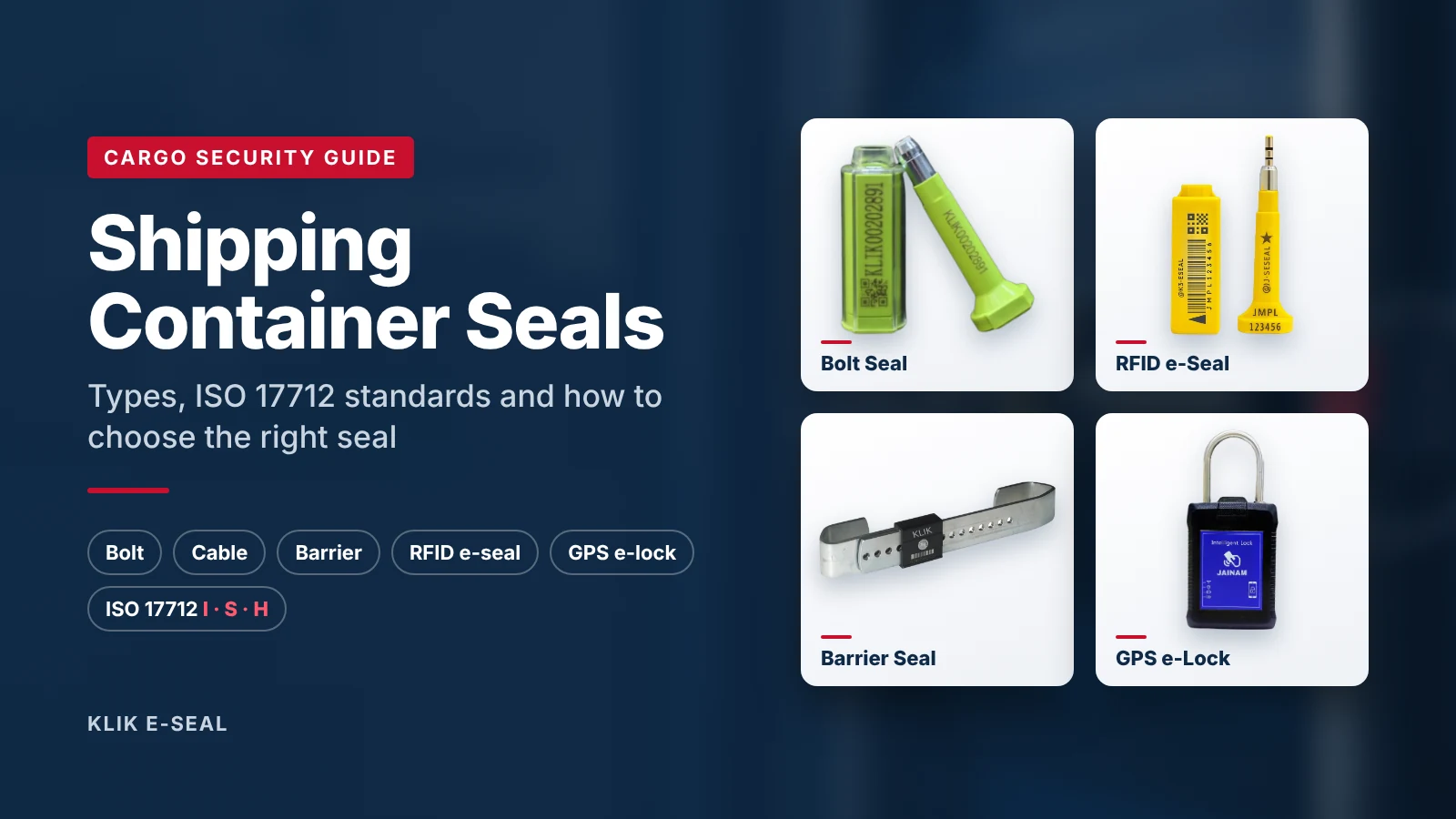

A shipping container seal is a numbered, single-use lock fitted to the container doors after loading. It won’t stop a determined thief with a grinder. What it does is prove whether the doors were opened between stuffing and delivery, and customs officers, carriers and insurers all rely on that proof.
Most loaded sea containers in international trade carry a high security (H class) seal certified to ISO 17712, usually a steel bolt seal. Cable seals, barrier seals and RFID e-seals come in when the route, the cargo or local customs rules call for them.
Key Takeaways
- Bolt seals are the default for loaded ocean containers; cable, barrier, RFID and GPS options cover other routes and risks.
- ISO 17712:2013 grades mechanical seals as I (indicative), S (security) or H (high security).
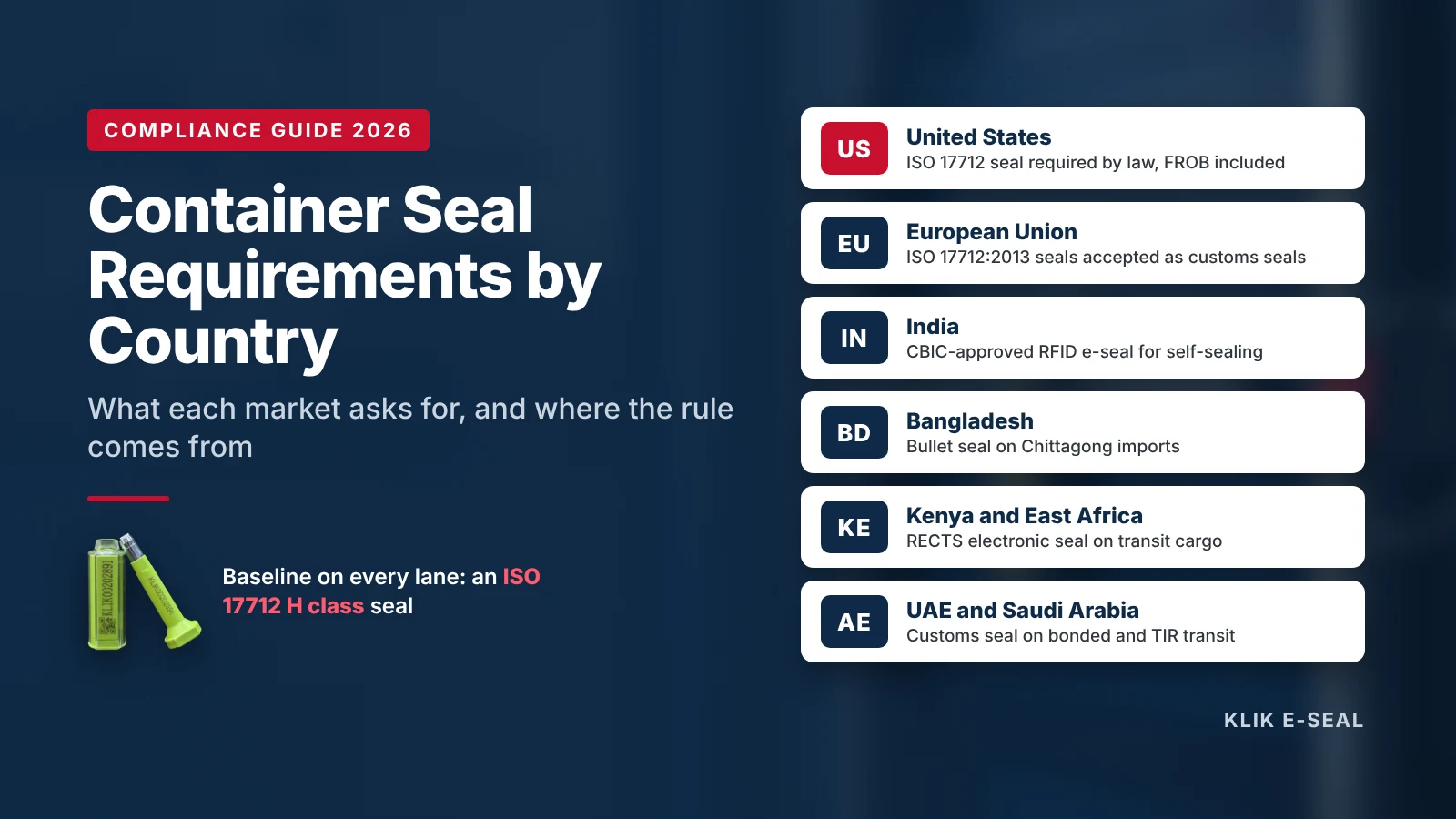
- US-bound containers under C-TPAT need an H class seal fitted right after stuffing.
- Indian exporters who self-seal must use RFID e-seals from a CBIC-approved vendor.
- Ask suppliers for the ISO/IEC 17025 lab test report for the exact seal model, not just an ISO 9001 certificate.
Types of Shipping Container Seals
Bolt seals
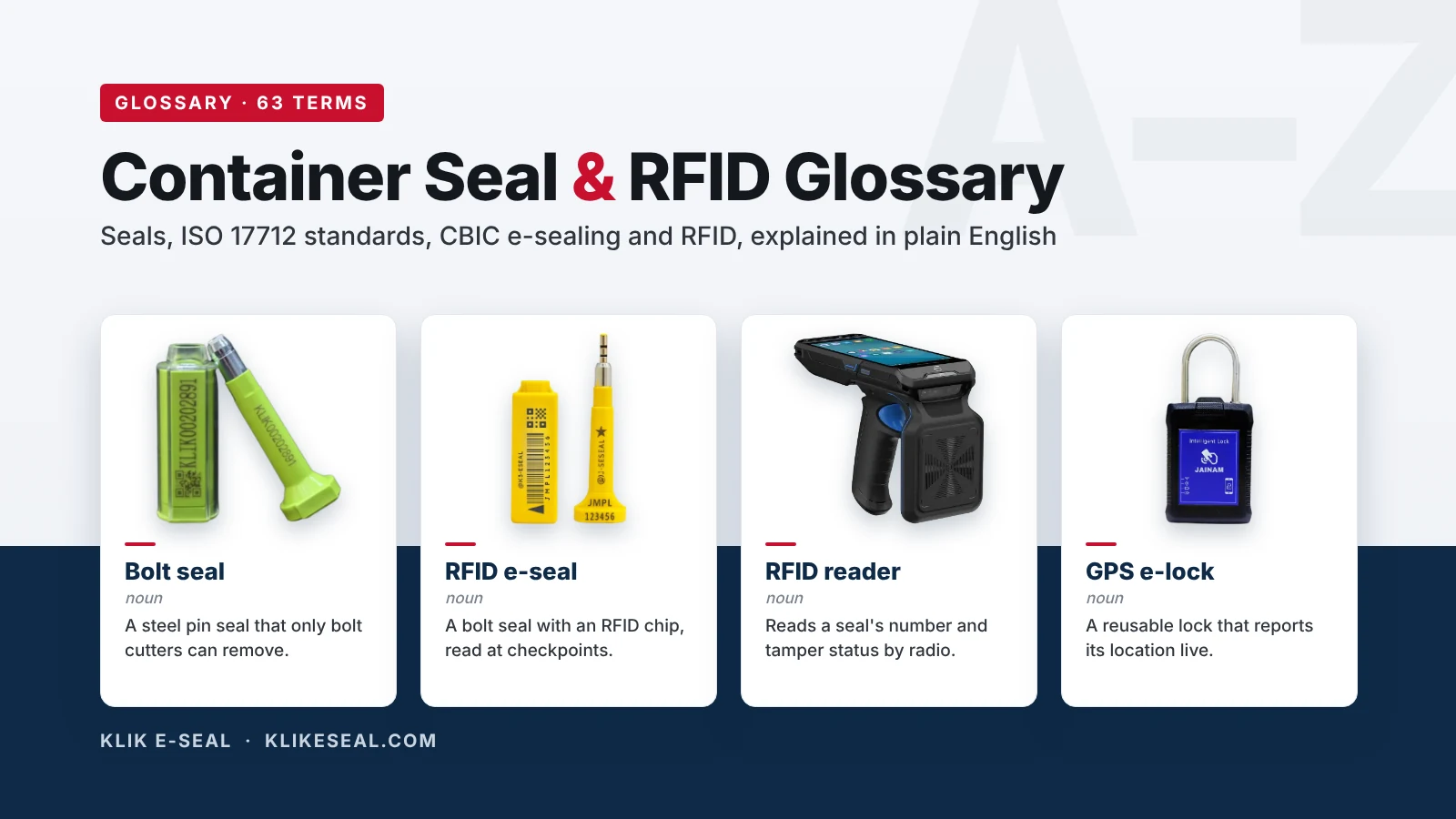
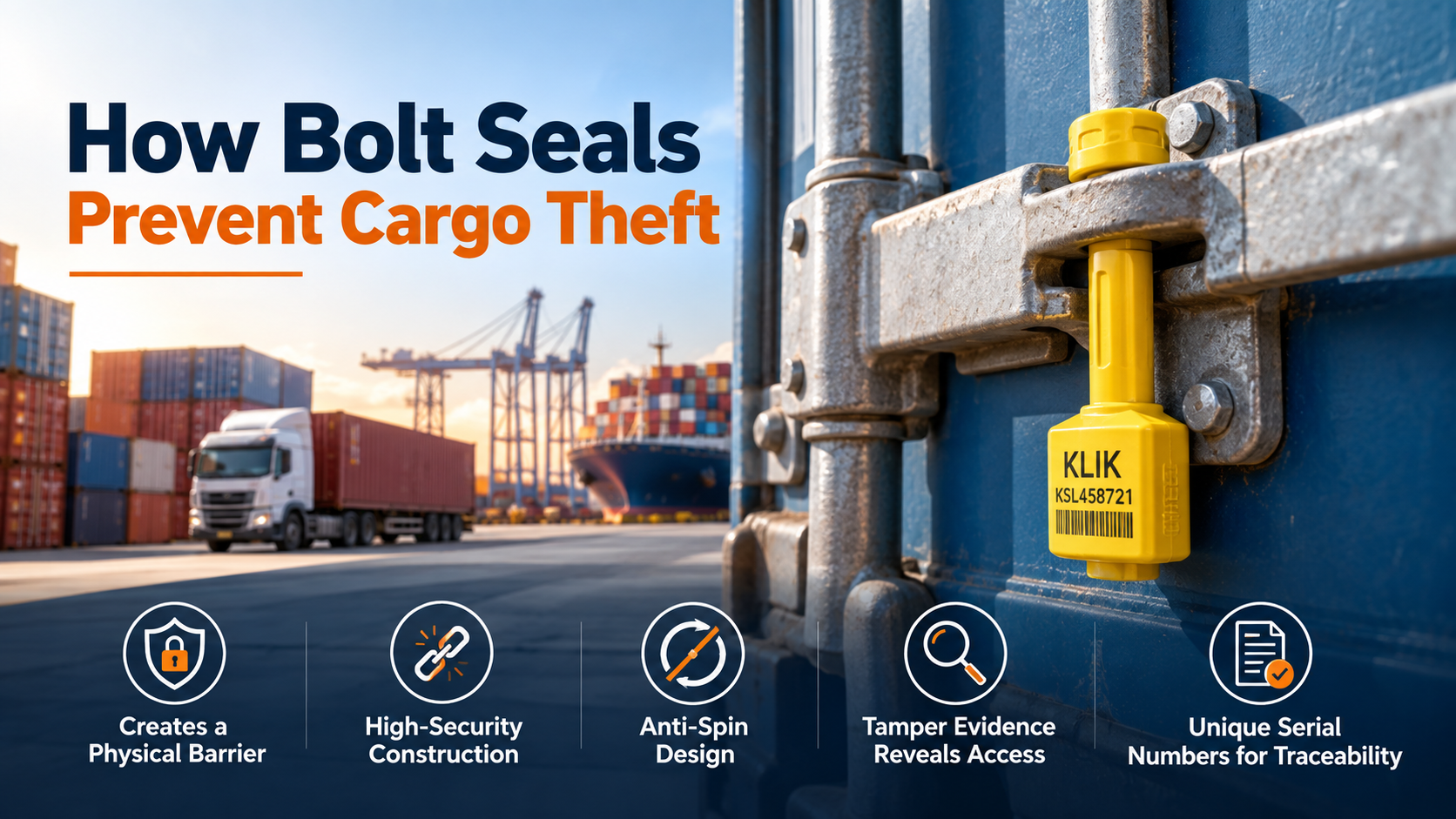
A bolt seal is a steel pin that pushes into a locking barrel and clicks shut. You can’t remove it without bolt cutters. The plastic coating carries a unique number and often a barcode, so the seal can be matched to the shipping documents.
It is the default seal for loaded ocean containers. See our bolt seals for containers and cargo.
Cable seals
A cable seal is a steel cable threaded through the locking points and pulled tight through a locking body. It is common on trucks, rail wagons and tankers. Thin cables are rated indicative or security, while heavier designs can be certified high security, so go by the class marked on the seal.
Barrier seals
A barrier seal is a heavy steel bar that locks across the container’s vertical door bars, acting as both a seal and a physical barrier. Shippers use it for high-value cargo and long port dwell times. More on this in what a barrier seal is and how to check it meets shipping standards.
Plastic and metal strip seals
These are indicative seals that snap by hand. They suit warehouse doors, internal transfers and empty containers, not loaded export containers that need an H class seal.
RFID e-seals
An RFID e-seal is a bolt or cable seal with an RFID chip inside. A reader picks up the seal number and tamper status, so nobody keys in numbers by hand. The mechanical body should still be high security. Our RFID bolt seal is built for this kind of scan-at-checkpoint workflow.
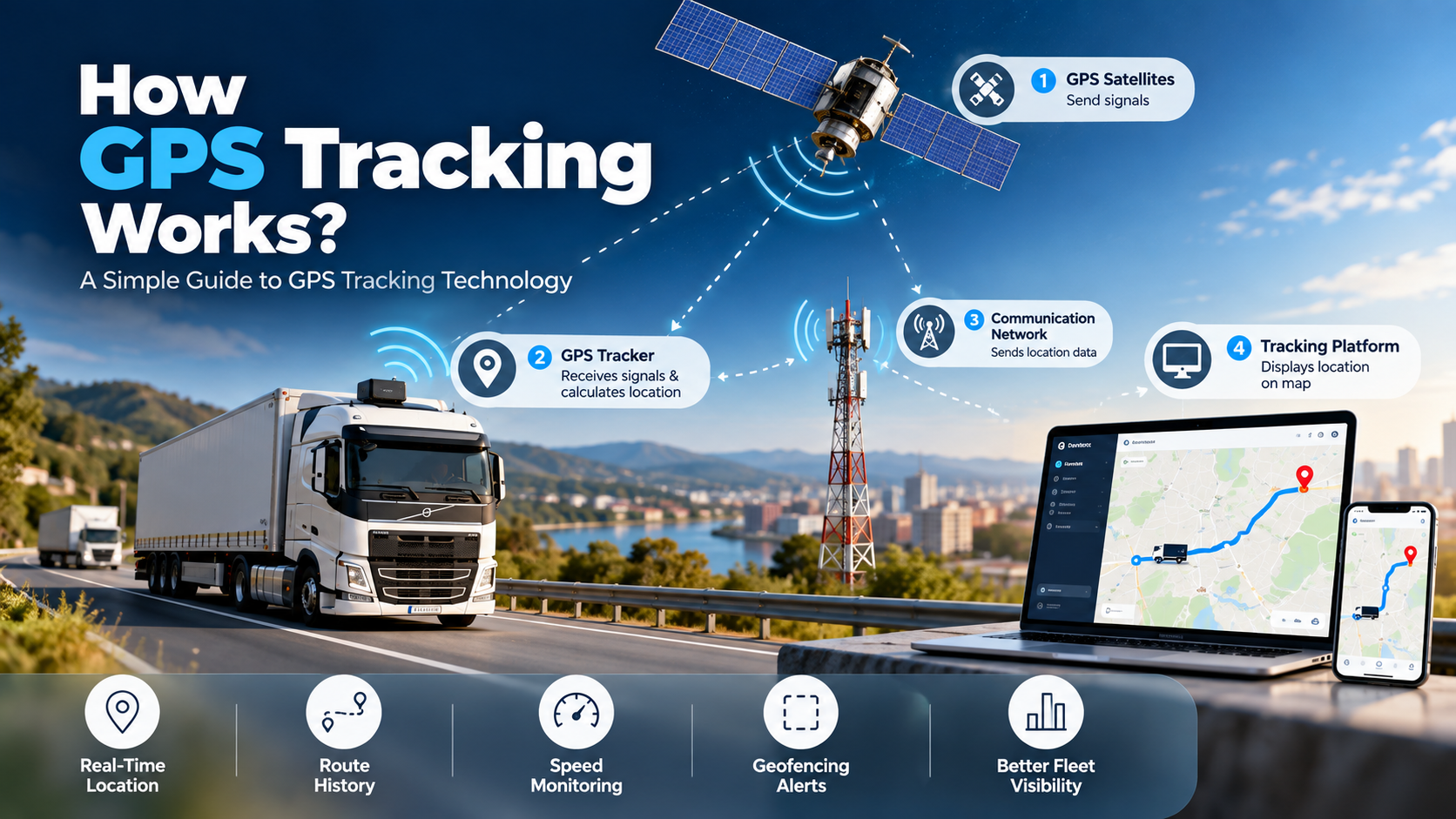
Passive RFID is not live tracking. Most RFID e-seals share data only when a reader scans them. If you need to know where a container is between checkpoints, that is a job for a GPS e-lock.
GPS e-locks
A GPS e-lock is a reusable, battery-powered lock that reports its location and alerts you if it is opened. It suits road legs and cross-border trucking. ISO 17712 does not grade it, so many shippers fit one alongside a bolt seal. See our GPS container lock.
| Seal Type | ISO 17712 Class | Single Use? | Typical Use |
|---|---|---|---|
| Bolt seal | H (high security) | Yes | Loaded FCL ocean containers |
| Cable seal | S or H, depending on design | Yes | Trucks, rail, awkward door hardware |
| Barrier seal | H on certified designs | Yes | High-value cargo, long port dwell |
| Plastic or strip seal | I (indicative) | Yes | Internal moves, empties, warehouse doors |
| RFID e-seal | H (mechanical body) | Yes | Customs e-sealing, scanned at checkpoints |
| GPS e-lock | Not graded under ISO 17712 | No, reusable | Live tracking on road and cross-border legs |
Note: The class shown is what each type usually reaches. Always check the class marked on the seal and its test report.
The Standards That Matter
ISO 17712:2013
ISO 17712:2013, Freight containers: Mechanical seals is the international standard for container seals. The 2013 edition is still the current one; ISO last reviewed and confirmed it in 2023.
It sorts seals into three classes by how hard they are to remove:
- I (Indicative): breaks by hand. It shows tampering but offers almost no resistance.
- S (Security): needs a simple tool, such as a cutter, to remove.
- H (High security): needs bolt cutters or a cable cutter. This is the class expected on loaded international containers.
To earn a class, a seal model passes tensile, shear, bending, impact and tamper-evidence tests at an ISO/IEC 17025 accredited lab, and the maker is audited on its security practices. A certified seal carries its class letter, a unique number and the maker’s mark.
C-TPAT for US-bound cargo
C-TPAT is the supply chain security programme run by US Customs and Border Protection. Its members must seal loaded US-bound containers with a high security seal that meets the current ISO 17712 standard, fitted right after stuffing.
Members also keep a seal log and file proof of compliance, usually the lab test certificate. CBP’s bulletin on ISO 17712 high security seals sets out what members are expected to show.
RFID e-sealing for Indian exporters
In India, exporters who self-seal full container loads at their own premises must use RFID e-seals. The rules come from CBIC circulars 26/2017, 36/2017 and 41/2017.
Each must be a tamper-proof, one-time bolt seal with a unique serial number, bought from a CBIC-approved vendor and read by customs at the port or ICD. See CBIC Circular 41/2017-Customs. We explain the process step by step in our guide to CBIC-approved RFID e-seal vendors for exporters.
ISO 18185 for electronic seals
ISO 18185 covers how container e-seals talk to readers. It defines an e-seal as a one-time seal that also meets the ISO 17712 high security class, so the electronics add to the mechanical strength rather than replace it.
Elsewhere, customs AEO programmes and shipping lines set their own seal rules. Check with your carrier before you commit to a seal type for a new lane.
How to Choose the Right Container Seal
1. Start With the Rules for Your Lane
US-bound containers need an ISO 17712 H class seal. Indian exporters who self-seal need a CBIC-approved RFID e-seal. For other routes, ask the carrier and check the destination customs requirements.
2. Match the Seal to the Cargo Risk
An H class bolt seal covers most FCL cargo. Electronics, pharmaceuticals and metals may justify a barrier seal or a second seal.
3. Check the Door Hardware
Bolt seals fit the standard locking hole. For misaligned holes, trailers or tankers, a cable seal is often easier.
4. Decide How Seals Will Be Checked
Visual checks need only a printed number and barcode. Reader-based gates need RFID.
5. Vet the Supplier, Not Just the Price
Ask for the ISO/IEC 17025 lab test report for the exact seal model you are buying, and ask how the supplier prevents duplicate numbers.
An ISO 9001 certificate is not proof of an H class seal. It shows the factory has a quality system. Only the seal’s own lab test report shows the seal passed ISO 17712.
If you are still weighing a standard seal against an electronic one, our comparison of bolt seals and RFID bolt seals goes deeper.
Need ISO 17712 Seals for Your Containers?
Klik e-Seal supplies high security bolt seals, cable and barrier seals, CBIC-approved RFID e-seals and GPS e-locks for sea, road and rail.
Request a QuoteFitting and Checking a Seal the Right Way
A good seal fitted badly gives little protection. C-TPAT guidance places it on the right-hand door, on the secure cam or the bottom of the centre-most locking bar.
Once it is on, use the VVTT check that CBP teaches:
- View the seal and the locking hardware for damage.
- Verify that the seal number matches the paperwork.
- Twist the seal to make sure the parts don’t unscrew.
- Tug on it to confirm it is fully locked.
Record the seal number on the bill of lading and photograph the sealed doors. At the destination, run the same check before cutting.
Why Buyers Source Container Seals From Klik e-Seal
We design and make security seals in India, from high security seals and barrier seals to RFID e-seals and GPS e-locks, so one supplier can cover every leg of a shipment.
- Standards first: high security bolt seals made to ISO 17712:2013, in a factory working to ISO 9001:2015.
- Customs-ready RFID: a CBIC-approved RFID e-seal vendor for Indian exporters.
- Built for volume: numbered, barcoded seals in the quantities forwarders and exporters order.
Tell us your lanes, cargo and monthly volume, and we will suggest the right seal. Get a quote on our products page.
Frequently Asked Questions
Are container seals mandatory?
Carriers expect every loaded container to be sealed before they accept it. Containers headed to the United States are expected to carry an ISO 17712 high security seal, and Indian exporters who self-seal must use CBIC-approved RFID e-seals.
Who provides the seal for a shipping container?
Shipping lines often hand one over with the empty container, but shippers can buy their own. Indian self-sealing exporters buy RFID e-seals from approved vendors.
What does the letter H on a container seal mean?
H marks a high security seal under ISO 17712. It means the seal model passed the standard’s strength and tamper-evidence tests at an accredited lab, and it needs bolt cutters or a cable cutter to remove.
Can a container seal be reused?
No. Bolt, cable, barrier, plastic and RFID e-seals are single-use and are cut off at the destination. GPS e-locks are the exception, as they are reusable electronic devices.
What should I do if the seal number doesn’t match the bill of lading?
Don’t open the container. Photograph the seal and the doors, then inform the carrier and the consignee. For US imports, C-TPAT members also report unresolved seal discrepancies to CBP.
Final Thoughts
Picking a container seal comes down to three questions: what the rules on your lane require, how much the cargo is worth to a thief, and how the seal will be checked along the way.
Get those right, buy from a supplier who can show the test report for the exact seal, and fit and record every seal the same way. The seal itself is cheap. The proof it gives you is not.