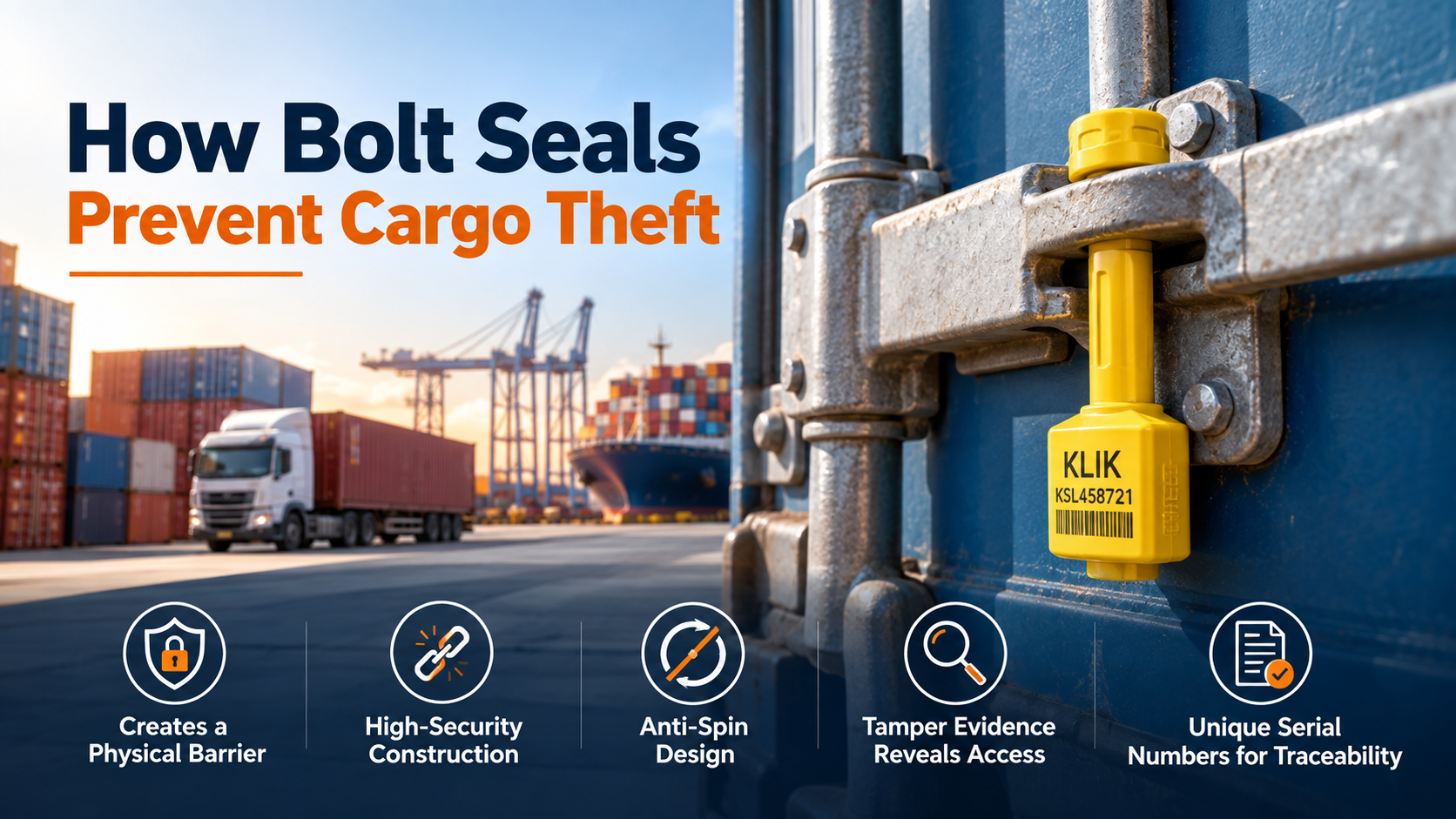

Bolt seals help prevent cargo theft by creating a physical barrier on container or trailer doors while providing visible evidence if the seal is broken or compromised. Their single-use construction, unique identification numbers, and security features can make unauthorized access more difficult and help logistics teams verify the integrity of a shipment.
Cargo can pass through multiple hands, vehicles, warehouses, ports, and checkpoints before reaching its destination. Every additional handoff creates another opportunity for unauthorized access. A simple but effective way to strengthen container security is to use a high-security bolt seal.
The key is to understand that a bolt seal is not a guarantee against theft. It is a security control that works as part of a wider cargo protection process.
Key Takeaways
- Bolt seals add a physical security barrier to container and trailer doors.
- High-security designs can make unauthorized removal more difficult.
- Tamper-evident construction helps reveal potential unauthorized access.
- Unique seal numbers allow teams to verify the seal used at dispatch and delivery.
- ISO 17712:2013 provides an international standard for mechanical freight container seals.
- Proper recording, application, inspection, and control of seals are essential to their effectiveness.
What Is a Bolt Seal?
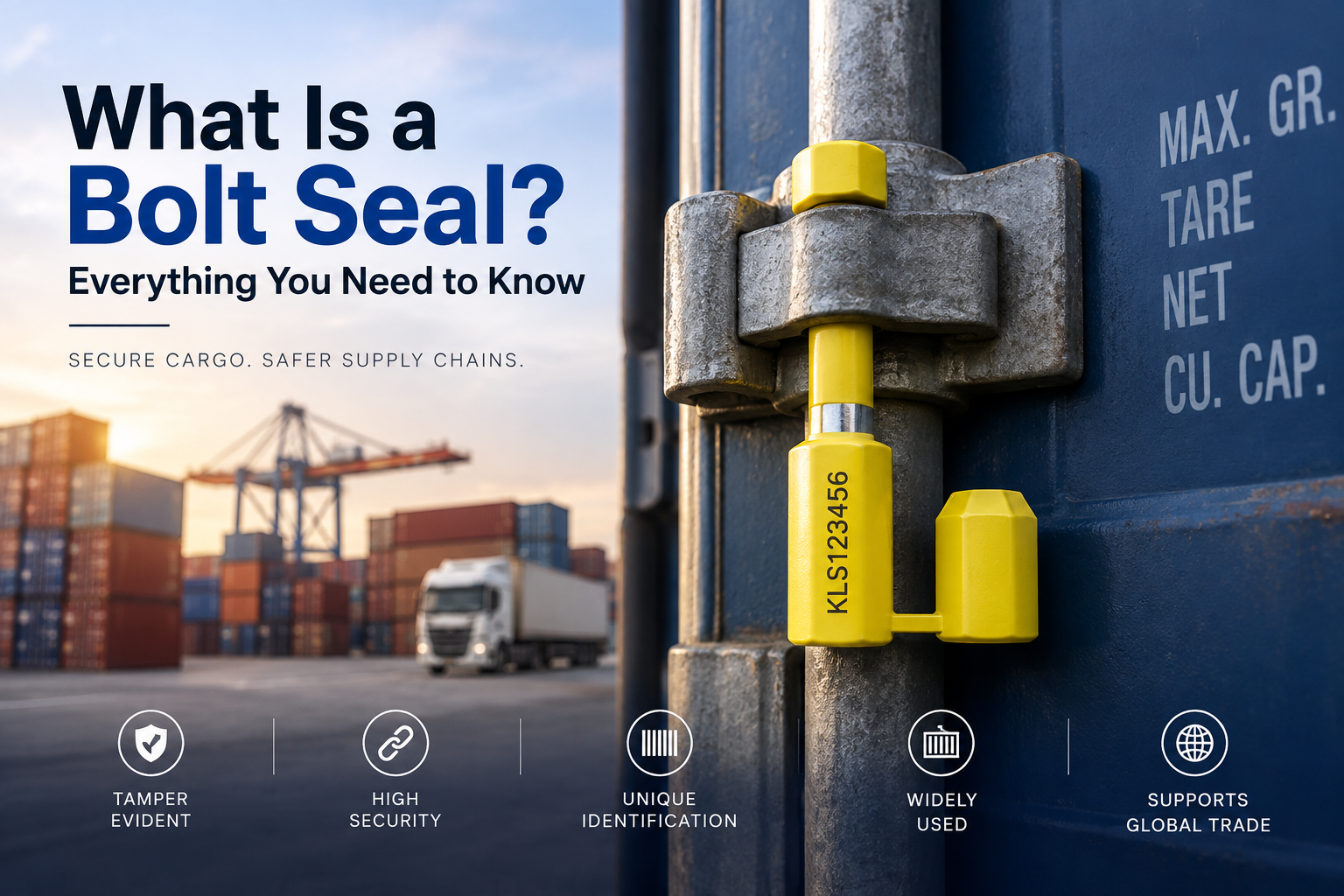
A bolt seal is a single-use security seal commonly used to secure shipping containers, truck trailers, rail cars, and other cargo access points.
A typical bolt seal consists of a metal bolt or pin and a locking body. Once installed through the appropriate locking points of a container door, the seal creates an additional barrier that must be removed or compromised before the doors can be opened normally.
High-security bolt seals may also include features such as:
- Steel construction
- Tamper-evident locking mechanisms
- Anti-spin mechanisms
- Sequential numbering
- Barcode or QR-code identification
- Custom identification or markings
The purpose is not simply to “lock” the container. The seal also provides a way to establish whether the secured access point has remained intact.
Why Are Cargo Containers Vulnerable to Theft?
A shipping container may travel through several stages before reaching its final destination:
- Warehouse→
- Truck→
- Port→
- Vessel→
- Port→
- Truck→
- Customer
During this journey, the cargo may be handled or inspected by different people and organizations.
A standard container locking mechanism provides basic physical security, but a security seal adds another layer. Once the container has been loaded and sealed, personnel can inspect the seal rather than relying only on the condition of the container doors.
This creates a simple question at every checkpoint: Does the seal still match the recorded seal, and does it appear uncompromised? That question is central to how mechanical seals support cargo security.
How Bolt Seals Prevent Unauthorized Access
1. They Create a Physical Security Barrier
The first function of a bolt seal is physical. The seal is installed through the locking points of the container or trailer doors. Once secured, the container cannot normally be opened without removing or breaking the seal.
This means an unauthorized person cannot simply open the doors and leave the seal untouched. A determined attacker may still attempt to compromise a seal, but doing so can create visible evidence that the original security barrier has been disturbed.
That is why bolt seals should be viewed as both a barrier and an indicator.
2. High-Security Construction Raises the Removal Barrier
High-security bolt seals are designed to provide greater resistance to unauthorized removal than basic security seals. Their construction can include metal components and locking systems designed for security applications.
The exact strength and construction depend on the particular seal, so buyers should verify the manufacturer’s technical specifications instead of assuming that every product described as a “high-security seal” has the same performance.
For international freight, ISO 17712:2013 establishes procedures for the classification and acceptance of mechanical freight container seals.
3. Anti-Spin Mechanisms Make Manipulation More Difficult
Some bolt seals incorporate an anti-spin design. The purpose is straightforward: if the locking components can rotate freely, attempting to manipulate the seal may become easier. An anti-spin mechanism is designed to limit that type of movement.
This does not mean that an anti-spin seal is impossible to compromise. It means the seal has been designed with an additional security consideration beyond simply placing a metal bolt through the door locking mechanism.
4. Tamper Evidence Reveals Unauthorized Access
A bolt seal is generally intended for one-time use. If someone needs to access a secured container, the seal normally has to be removed, broken, or otherwise compromised. That creates an opportunity for inspection.
For example, imagine a container leaving a warehouse with seal number KS458721 recorded in the shipping documentation. At the destination, the receiving team checks the seal and finds a different number or visible damage. The issue can then be investigated before the cargo is accepted as intact.
Tamper-evident is more useful than tamper-proof. A security seal does not have to make unauthorized entry impossible to provide value. It can make unauthorized entry detectable.
5. Unique Serial Numbers Support Traceability
A security seal becomes more useful when it has a unique identification number. The process can be simple:
- The seal number is recorded when the cargo is dispatched.
- The seal is installed on the loaded container.
- The number is included in the relevant shipping records.
- The seal is checked during inspection or at destination.
- The receiving team compares the physical seal with the recorded information.
If the number does not match, the discrepancy becomes a reason for further investigation. U.S. Customs and Border Protection’s published seal procedures also emphasize logging seal usage, verifying seal numbers, checking seal integrity, and documenting compromised or replaced seals.
How Bolt Seals Help Protect Cargo During Transit
At the Loading Point
Security begins before the container leaves the facility. A basic process should include:
- Inspecting the container before loading.
- Completing the loading process.
- Closing the container doors correctly.
- Applying the appropriate seal.
- Recording the seal number.
- Checking that the seal is correctly positioned.
- Photographing the sealed container where required by company procedures.
The seal should not be treated as an afterthought. Its number and condition should become part of the shipment record.
During Transportation
The seal provides a physical checkpoint during transit. If a driver, carrier, security team, or inspection authority needs to verify the shipment, they can check:
- Seal number
- Seal condition
- Seal position
- Evidence of damage or tampering
- Corresponding shipping documentation
If a seal has been replaced during transit for a legitimate reason, the replacement should be properly documented.
At the Destination
The receiving team should compare the physical seal against the shipment documentation before removing it. A basic inspection can include:
- Verify the seal number.
- Inspect the seal for visible damage.
- Check that the seal is positioned correctly.
- Compare the information with the shipping records.
- Record any discrepancy before removing the seal.
These procedures help turn a simple piece of hardware into part of a documented chain of custody.
Why ISO 17712 Matters for Cargo Security
ISO 17712:2013 is an international standard covering mechanical freight container seals. It establishes procedures for the classification and acceptance of mechanical seals used to secure freight containers in international commerce. ISO lists the 2013 edition as the current published version and notes that it was last reviewed and confirmed in 2023.
For businesses involved in international logistics, checking the applicable standard and certification requirements is important when selecting high-security seals.
It is worth remembering that compliance with a standard does not replace good security procedures. ISO itself notes that proper selection, storage, accounting, application, documentation, and handling of seals are relevant to successful use.
Bolt Seals vs Other Types of Cargo Seals
Different shipments require different security approaches.
| Feature | Bolt Seal | Cable Seal | Plastic Seal | RFID / Electronic Seal |
|---|---|---|---|---|
| Physical security | High for suitable high-security models | Varies by design | Generally suited to lower-security applications | Depends on physical design |
| Tamper indication | Yes | Yes | Yes | Yes |
| Unique identification | Available | Available | Available | Usually available |
| Electronic monitoring | No | Usually no | No | Yes |
| Battery required | No | No | No | Depends on system |
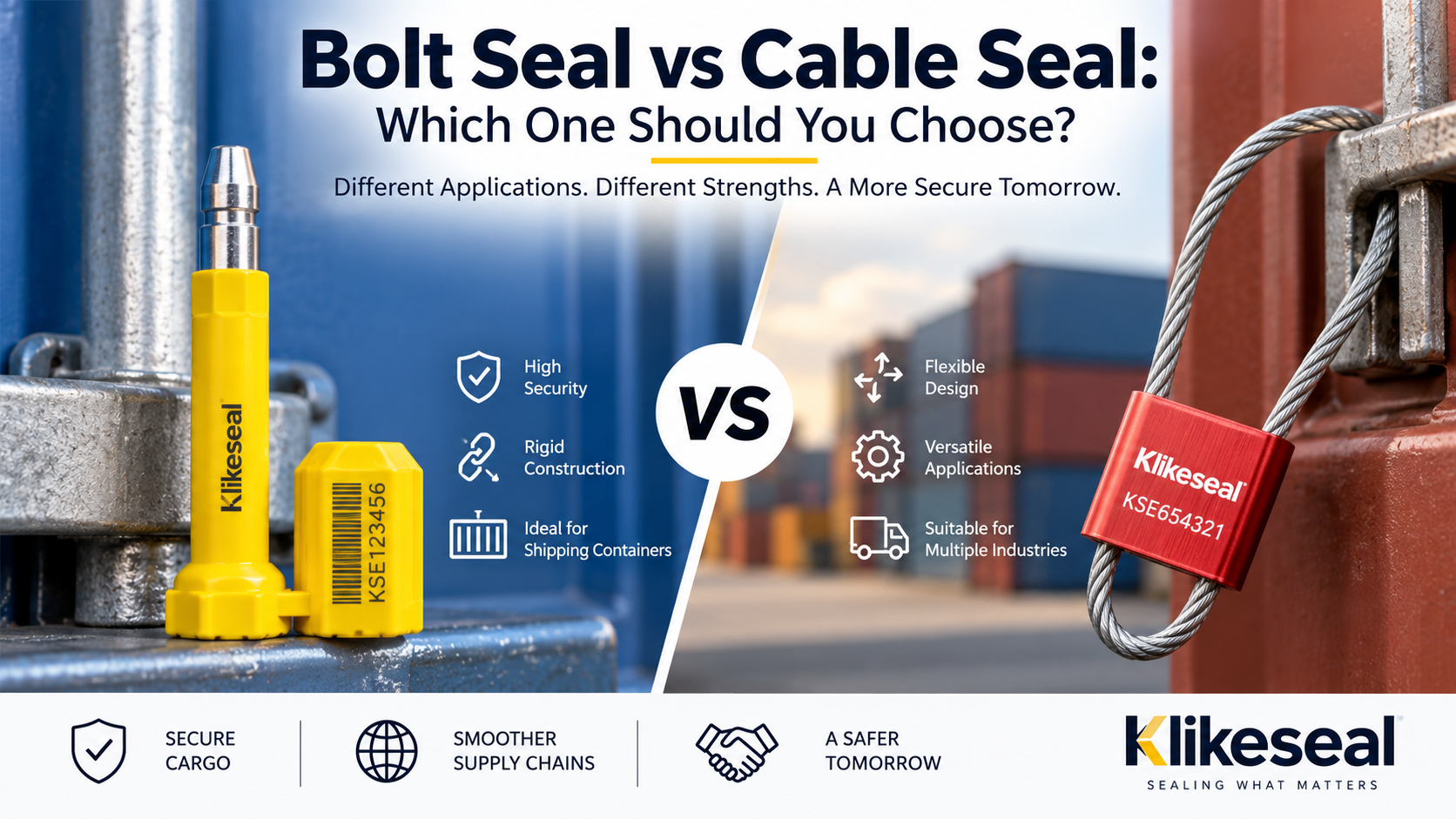
| Typical application | Containers and high-value cargo | Containers and transport equipment | Bags, doors and general applications | Advanced monitoring and digital workflows |
Note: The right choice depends on the cargo, route, security requirements, operating procedures, and applicable regulations.
Looking for High-Security Seals for Your Containers?
Klik eSeal supplies ISO 17712 high-security bolt seals alongside advanced RFID and GPS electronic container seals. Protect container integrity across sea, road, and rail corridors.
Request a QuoteHow to Use Bolt Seals Correctly
A high-security seal cannot compensate for poor seal management. A practical process is:
1. Inspect the Seal
Make sure the seal is undamaged before use.
2. Verify Its Identification Number
Check the number before installation.
3. Secure the Container
Close and secure the container doors properly.
4. Apply the Bolt Seal
Install the seal according to the manufacturer’s instructions.
5. Record the Number
Add the seal number to the relevant shipment records.
6. Verify the Seal
Check that the seal is correctly positioned and secure.
7. Inspect It at Destination
Compare the seal number and physical condition before removal. U.S. Customs and Border Protection has also published procedures recommending verification of the seal number, condition, and proper attachment at the point of sealing.
Common Mistakes That Reduce Bolt Seal Security
Even a high-security bolt seal can become less effective when the surrounding process is weak. Common mistakes include:
- Not recording the seal number.
- Failing to inspect the container before sealing.
- Using a damaged seal.
- Applying the seal incorrectly.
- Failing to inspect the seal at delivery.
- Ignoring discrepancies in seal numbers.
- Replacing a seal without documenting the replacement.
- Treating the seal as the only cargo-security measure.
The physical seal is only one part of the security system. Documentation and inspection give the seal its operational value.
Choosing the Right Bolt Seal for Cargo Protection
Before purchasing bolt seals, businesses should evaluate:
- Applicable security requirements
- ISO 17712 requirements where relevant
- Material and construction
- Locking mechanism
- Anti-spin design
- Tamper evidence
- Serial numbering
- Barcode or QR-code requirements
- Custom identification requirements
- Application environment
- Required quantities
- Manufacturer documentation and certifications
For high-value or international shipments, the decision should be based on the actual security requirements rather than simply choosing the cheapest available seal.
Frequently Asked Questions
How do bolt seals prevent cargo theft?
Bolt seals create an additional physical barrier on container and trailer doors. If someone wants to access the secured area, the seal generally needs to be removed or compromised, creating an opportunity for the shipment owner to detect unauthorized access.
Are bolt seals tamper-proof?
No security seal should automatically be described as completely tamper-proof. Bolt seals are designed to provide physical resistance and tamper evidence. Their effectiveness also depends on correct installation, inspection, documentation, and security procedures.
What makes a bolt seal high security?
A high-security bolt seal can include strong metal construction, a secure locking mechanism, tamper-evident characteristics, and other features such as anti-spin protection. Applicable ISO 17712 requirements should also be considered for international freight applications.
Are bolt seals required for shipping containers?
Requirements depend on the shipment, destination, carrier, customer, and applicable security program. For example, certain U.S.-bound supply-chain security procedures require high-security seals meeting applicable ISO 17712 requirements.
What is ISO 17712?
ISO 17712:2013 is an international standard for mechanical freight container seals. It establishes procedures for their classification and acceptance for securing freight containers in international commerce.
Can a bolt seal be reused?
Bolt seals are generally designed as single-use security devices. Once removed or compromised, a new seal should normally be applied according to the organization’s security procedure.
How can you tell if a bolt seal has been tampered with?
Check the seal number against the shipment record and inspect the seal for damage, unusual marks, broken components, incorrect positioning, or other signs of compromise. Any discrepancy should be documented and investigated according to the organization’s security procedure.
What information should be recorded when applying a bolt seal?
At minimum, organizations should consider recording the seal identification number, shipment or container information, application details, and any relevant inspection or replacement information. Specific record-keeping requirements depend on the organization’s procedures and applicable security programs.
Final Thoughts
Cargo theft prevention is rarely about one security product. It is about creating multiple checkpoints that make unauthorized access harder to carry out and easier to detect.
A properly selected bolt seal provides one of those checkpoints. The physical barrier, tamper evidence, identification number, inspection process, and shipment documentation work together to protect container integrity throughout transportation.
For businesses moving valuable cargo, the better question is not simply “Which seal should we buy?” It is: “Can our seal, inspection, and documentation process tell us when something has changed?”
That is where a bolt seal becomes more than a piece of hardware. It becomes part of the cargo security system.