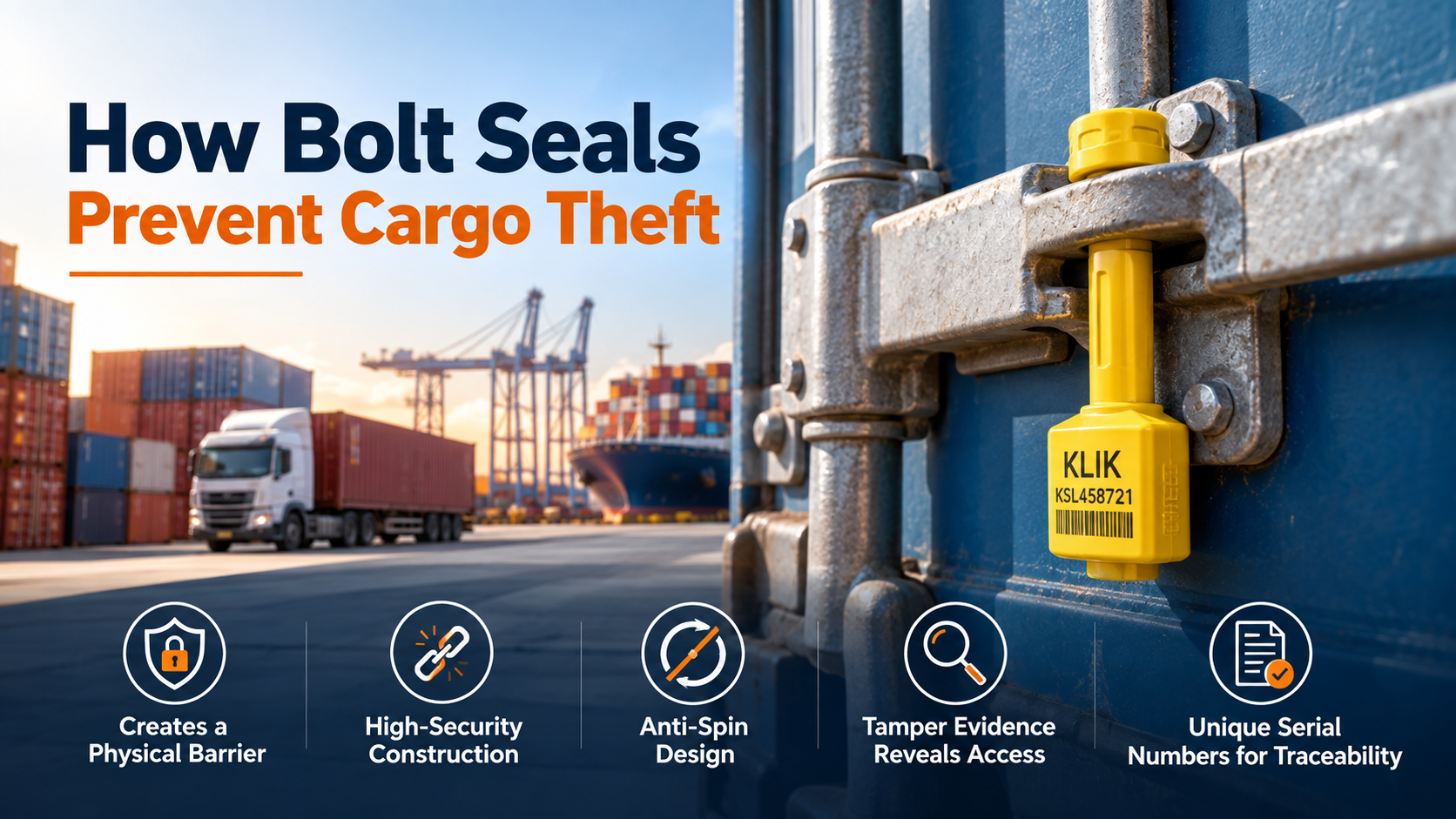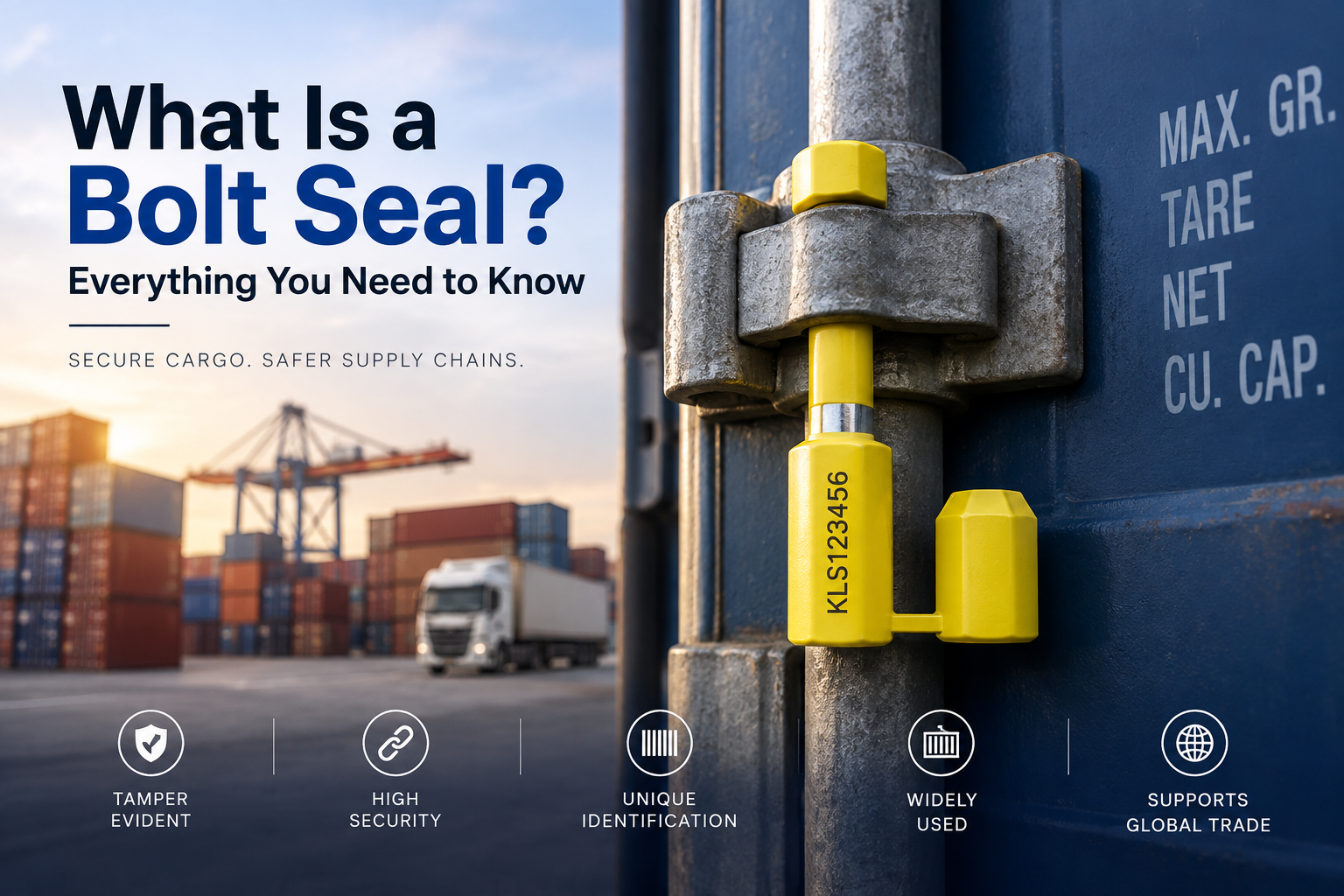

A bolt seal is a high-security, tamper-evident device used to secure shipping containers, trucks, trailers, and other cargo doors during transportation. It consists of a metal bolt and locking body designed to prevent unauthorized opening and leave visible evidence of any interference. Its unique serial number links the physical seal to the shipment record, making it a key part of cargo chain-of-custody.
For logistics and supply chain operations, bolt seals provide a simple way to protect cargo integrity and verify whether a container has been opened during transit. But what exactly makes a bolt seal different from other security seals? How does it work, where is it used, and what should you look for when choosing one? This guide explains everything you need to know.
What Is a Bolt Seal?
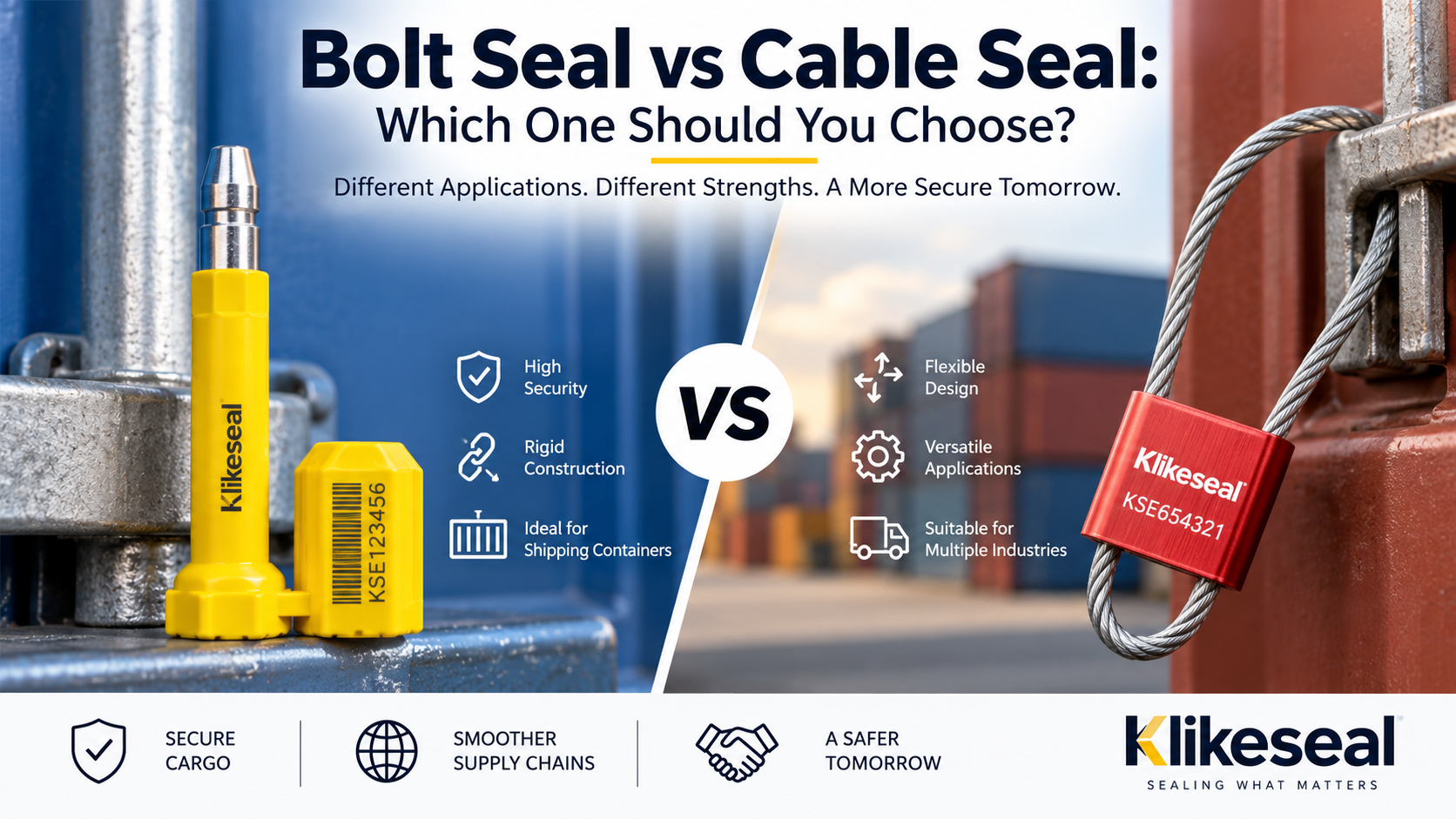
A bolt seal is a single-use security seal designed to secure the locking points of containers and vehicles. The bolt passes through the appropriate locking holes and is secured inside the locking body.
Once installed, the seal helps prevent unauthorized access. If someone wants to open the secured container, the seal generally has to be cut, broken, or otherwise removed, leaving evidence that the original seal has been disturbed.
Unlike a conventional padlock, a bolt seal is not intended to be a reusable locking system. Its primary purpose is to provide tamper evidence combined with a higher level of physical resistance than many basic security seals.
Key Points
- Bolt seals are generally designed for one-time use.
- They provide physical security and visible tamper evidence.
- They are commonly used on shipping containers, trucks, and trailers.
- Many bolt seals carry unique serial numbers for identification.
- High-security models may be manufactured and tested to applicable standards such as ISO 17712.
How Does a Bolt Seal Work?
The operating principle is straightforward. First, the container doors are closed and the locking points are aligned. The bolt is passed through the designated holes and inserted into the locking body. Once secured, the seal remains in place throughout the shipment.
The seal number is normally recorded along with the container number and shipment information. At the destination, the receiving team inspects the seal before opening the container.
A typical verification process involves:
- Close and secure the container doors.
- Apply the bolt seal through the locking point.
- Record the seal’s unique identification number against the shipment.
- Transport the shipment.
- Inspect the seal at each custody change and at the destination.
- Compare the physical seal and recorded number before opening.
If the seal is broken, missing, replaced, or shows signs of manipulation, the shipment can be flagged for investigation.
Why Are Bolt Seals Used?
Cargo can pass through several locations and organizations before reaching its destination. A container may move from a factory to a warehouse, transport terminal, port, customs facility, and finally to the consignee. Every additional handoff can create an opportunity for unauthorized access.
A bolt seal creates a visible control point. Instead of relying only on paperwork or trust between parties, logistics teams have a physical indicator that can be checked at every stage of the journey.
The purpose of a bolt seal is not to make theft impossible — no mechanical seal should be treated as an absolute barrier. Its value comes from making unauthorized opening more difficult and, importantly, detectable.
Where Are Bolt Seals Used?
Bolt seals are commonly used wherever cargo access needs to be controlled or monitored.
Shipping Containers
One of the most common applications is securing ISO freight containers during international transportation. The bolt seal is fitted through the container’s locking rod hasp and recorded against the bill of lading.
Trucks and Trailers
Depending on the vehicle’s locking design, bolt seals can secure cargo compartments and provide evidence of unauthorized opening during road transport.
Ports and Terminals
Seal numbers can be recorded and checked during cargo handling and transfer processes. Customs authorities at many ports require seals to be intact before releasing a container for onward movement.
Warehouses and Distribution Centres
Businesses can use security seals when moving goods between facilities or handing shipments to third-party logistics providers.
Customs-Controlled Shipments
Security seals may also form part of cargo-control procedures where maintaining evidence of container integrity is required by regulatory or trade compliance programs.
What Makes a Bolt Seal High Security?
Not every product marketed as a bolt seal automatically qualifies as a high-security seal. High-security applications require attention to the seal’s construction, material, locking mechanism, tamper resistance, and applicable testing requirements.
For international container transportation, ISO 17712 is an important standard to understand. ISO 17712:2013 is the current edition of the International Standard for mechanical freight container seals. It establishes three classifications:
| Classification | Main Purpose |
|---|---|
| Indicative | Shows evidence of entry or interference |
| Security | Provides some resistance to intrusion |
| High Security | Provides greater resistance to forced removal |
Buyers should check the specific product’s certification and test documentation rather than relying only on marketing phrases such as “high security”.
When evaluating a bolt seal, consider:
- Applicable security standard and classification
- Product certification or test documentation
- Bolt and locking-body construction materials
- Tamper-evident features
- Unique identification or numbering system
- Environmental suitability for the route
- Compatibility with the container or vehicle hardware
Types of Bolt Seals
Bolt seals can be differentiated by their construction and the technology incorporated into them.
Standard Bolt Seals
These are mechanical seals built around a bolt and locking body. They are commonly used when physical security and visual inspection are the primary requirements. Removal requires cutting or breaking the seal, making tampering visible.
High-Security Bolt Seals
These are designed for applications requiring greater resistance to unauthorized removal and may meet applicable high-security standards when properly tested and certified. High-security seals are required under certain trade programs such as CTPAT for qualifying U.S.-bound cargo.
RFID Bolt Seals
RFID bolt seals combine a mechanical bolt seal with an RFID component. Instead of relying only on visual inspection and manual number recording, the RFID identifier can be read electronically using compatible equipment. This can help organizations automate identification and verification at selected checkpoints.
Bolt Seal vs. RFID Bolt Seal
The main difference between a conventional bolt seal and an RFID bolt seal is the identification layer.
| Feature | Conventional Bolt Seal | RFID Bolt Seal |
|---|---|---|
| Physical security | Yes | Yes |
| Visual tamper evidence | Yes | Yes |
| Manual serial number | Yes | Yes |
| Electronic identification | No | Yes |
| Automated verification | No | Yes (with compatible RFID readers) |
RFID does not replace the mechanical security function — it adds a digital identification layer on top of the physical seal.
RFID identification becomes particularly useful in larger logistics operations where hundreds or thousands of containers may pass through a facility. Automated identification can reduce dependence on manual entry and make verification workflows easier to scale.
What Are the Benefits of Using Bolt Seals?
Tamper Evidence
A broken or manipulated seal can alert the receiving team that the original closure may have been compromised, triggering investigation before cargo is accepted.
Unique Identification
A serial number makes it possible to associate a specific seal with a specific container or shipment, creating an auditable chain of custody.
Simple Verification
Teams can inspect the seal and compare its number with shipment records before opening the container — no specialist equipment required for a conventional bolt seal.
One-Time Use
Single-use construction makes unauthorized replacement easier to identify when proper records are maintained and seal inventories are controlled.
Suitable for Large-Scale Logistics
Bolt seals can be incorporated into standard container-sealing procedures across warehouses, transport operations, ports, and distribution networks at scale.
How to Choose the Right Bolt Seal
The cheapest seal is not necessarily the right seal. Selection should start with the security requirement and operating environment, not the unit price.
1. Identify the Application
Determine whether the seal will be used on an ISO shipping container, trailer, truck, warehouse movement, or another asset. The locking hardware on different vehicles varies — confirm compatibility before ordering.
2. Check the Applicable Standard
If a particular standard is required by your customer, carrier, route, or regulatory process — such as ISO 17712 High Security for CTPAT-compliant shipments — verify that the specific product meets it and that documentation is available.
3. Evaluate Construction
Look at the materials, bolt design, locking mechanism, and resistance to removal. A metal bolt is not automatically a high-security seal — classification depends on tested performance.
4. Check Identification
Choose a numbering system that is easy to read, record, and verify. For automated operations, consider RFID-enabled identification that can be read without manual data entry.
5. Consider Environmental Conditions
Temperature extremes, moisture, salt air, rough handling, transportation distance, and storage conditions can all influence which seal design is appropriate for your route.
6. Ask for Documentation
A reputable manufacturer should be able to provide clear product specifications and relevant certification or test documentation for any security classification claims made.
Need bolt seals for your shipping operations?
Klik eSeal supplies ISO 17712 High-Security mechanical bolt seals alongside advanced RFID and GPS electronic container seals — protecting cargo integrity across sea, road, and rail corridors.
Request a Klik eSeal QuoteHow Should Bolt Seals Be Managed?
Applying a seal is only one part of the security process. Record keeping is equally important and is what gives the seal its value as a chain-of-custody tool.
Organizations should consider recording:
- Container number
- Seal number
- Date and time of sealing
- Location where the seal was applied
- Shipment reference
- Destination
- Person or team responsible for sealing
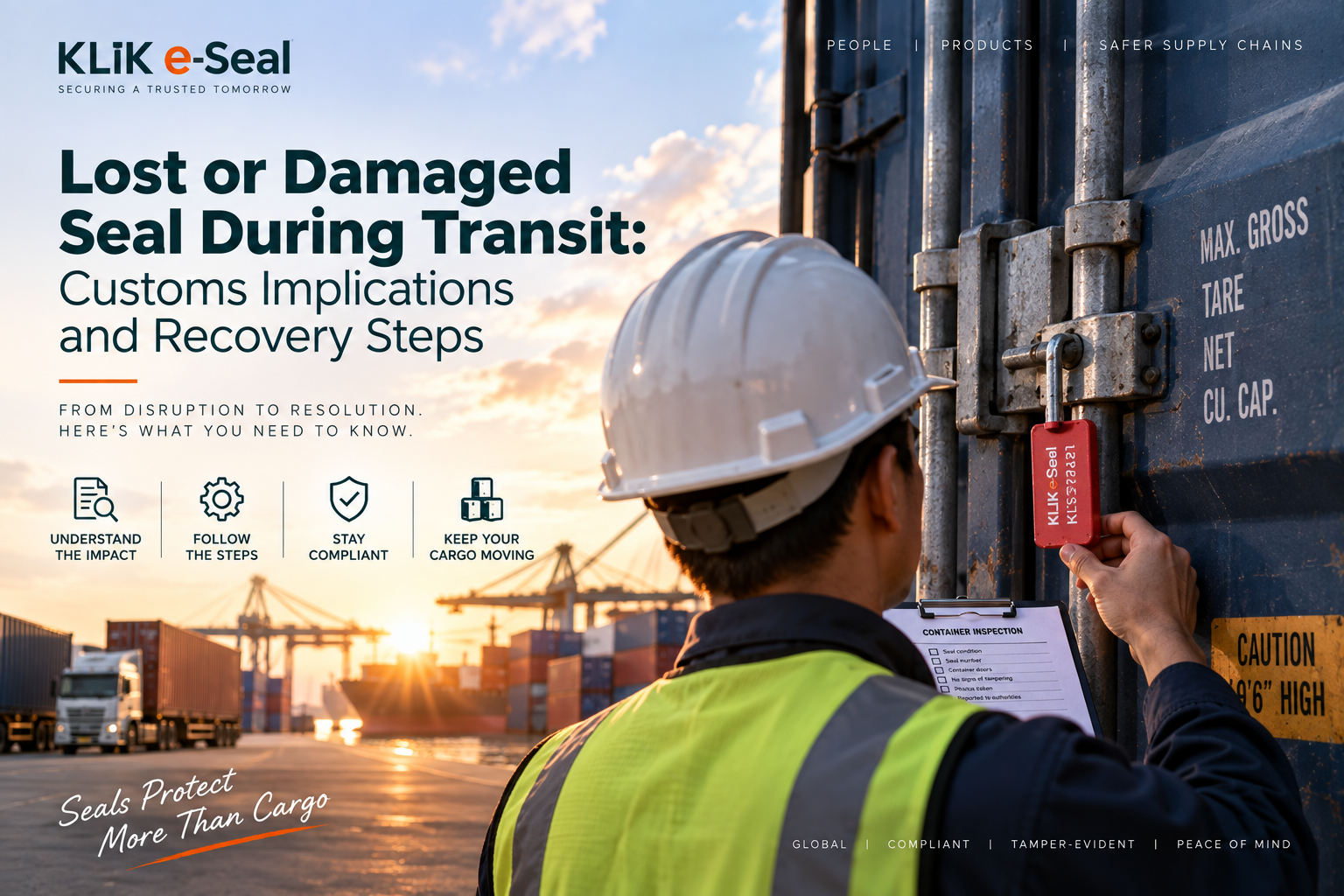
At the destination, the seal should be inspected before the container is opened. Any discrepancy — a broken seal, a mismatched number, or a seal that appears to have been replaced — should be documented and investigated according to the organization’s security procedure.
For RFID-enabled seals, the electronic identifier can be associated with shipment records and verified using compatible RFID infrastructure, reducing manual entry errors and speeding up gate processes.
Are Bolt Seals Enough to Prevent Cargo Theft?
No. A bolt seal is one layer of cargo security, not a complete anti-theft system. No mechanical seal can guarantee that theft or unauthorized access will never occur.
A broader cargo security strategy may include:
- Access controls at loading and unloading facilities
- CCTV coverage of key handling areas
- Secure yards and perimeter controls
- Driver and vehicle verification processes
- Route monitoring and pre-planned itineraries
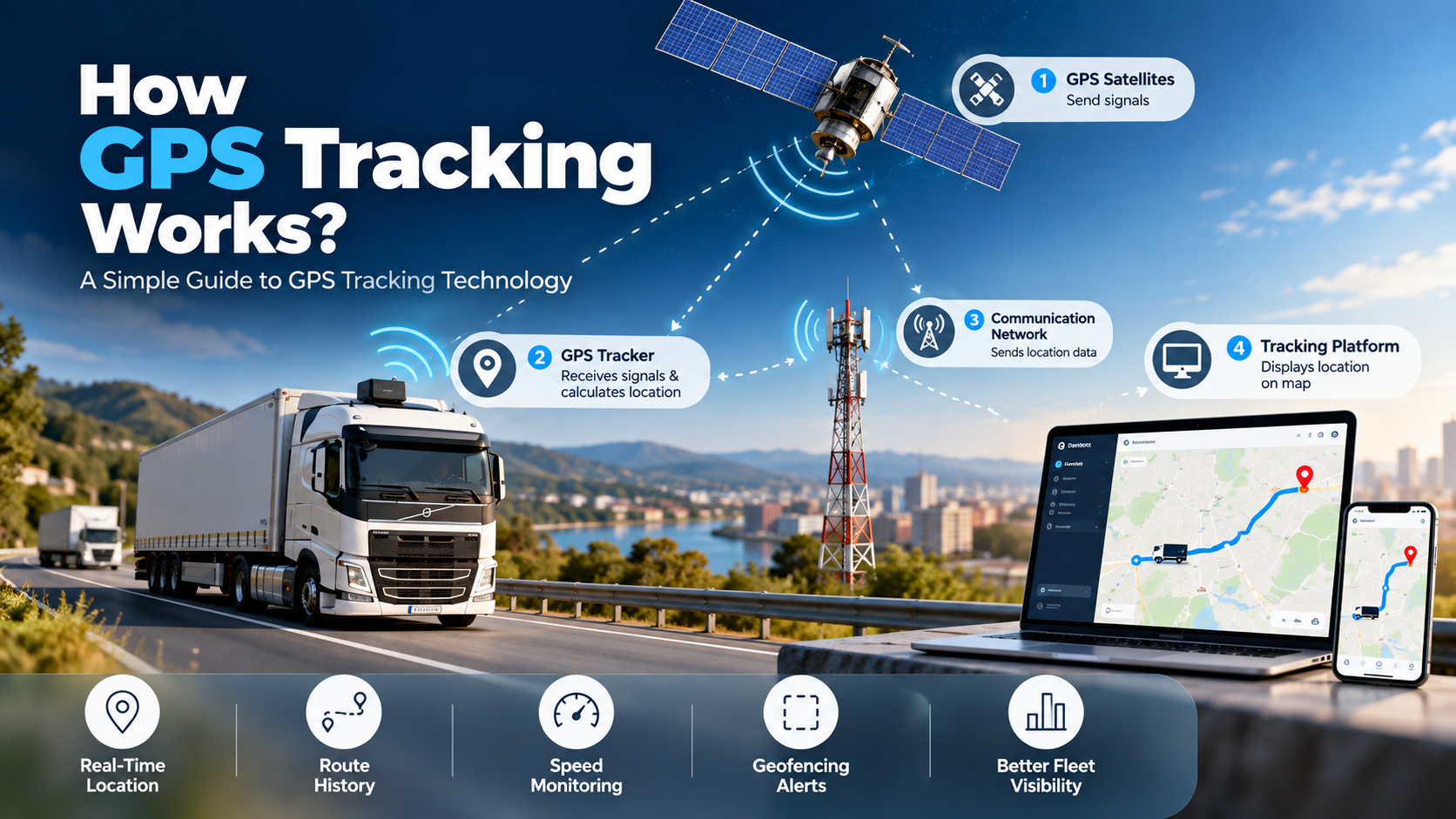
- GPS or GNSS tracking of containers and vehicles
- RFID identification and automated gate verification
- Documented inspection procedures at every custody change
The role of the bolt seal within this wider framework is narrower but valuable: it helps secure the physical opening point and provides visible evidence if the original seal has been disturbed at any point in the journey.
Frequently Asked Questions
What is a bolt seal used for?
A bolt seal is used to secure shipping containers, trucks, trailers, and other cargo access points while providing evidence of unauthorized opening or tampering. Its unique serial number links the physical seal to shipment records for chain-of-custody verification.
Is a bolt seal reusable?
Most high-security bolt seals are designed for one-time use. After removal, a new seal should be applied when the shipment needs to remain secured. Single-use construction is what makes unauthorized replacement visible when proper records are maintained.
Are all bolt seals high-security?
No. A “bolt seal” describes the product format without automatically establishing its security classification. Check the applicable standard and the manufacturer’s certification or test documentation for the specific product model.
What is an ISO 17712 bolt seal?
An ISO 17712 bolt seal is a mechanical freight container seal that meets the applicable requirements of ISO 17712:2013 when properly tested and certified. The standard defines three classifications: Indicative, Security, and High Security. Buyers should verify documentation for the specific product, not just the product category.
What is the difference between a bolt seal and an RFID bolt seal?
A standard bolt seal relies on mechanical security and visual inspection with a manually recorded serial number. An RFID bolt seal adds electronic identification that can be read by compatible RFID equipment, enabling automated verification and reducing manual data-entry errors.
Can a bolt seal prevent container theft?
A bolt seal cannot guarantee that theft will not occur. It is designed to make unauthorized access more difficult and provide visible evidence when a seal has been removed or tampered with. Effective cargo security requires multiple layers beyond the seal itself.
Conclusion
A bolt seal is a simple but important component of cargo security. By securing container or vehicle locking points and providing visible evidence of interference, it helps logistics teams protect shipment integrity during transit.
For operations that need physical and visual verification, a conventional high-security bolt seal may be sufficient. For larger or more automated supply chains, an RFID bolt seal can add electronic identification to the same physical security process — reducing manual entry and scaling more easily across high-volume gate operations.
The right choice depends on the application, required security level, applicable standards, operating conditions, and verification workflow. Instead of choosing a seal based only on price, evaluate its construction, documentation, identification system, and suitability for how your cargo actually moves.
Sources: ISO 17712:2013 (confirmed December 2023); World Customs Organization (WCO) Safe Framework of Standards; U.S. CBP CTPAT Highway Carrier Minimum Security Criteria.