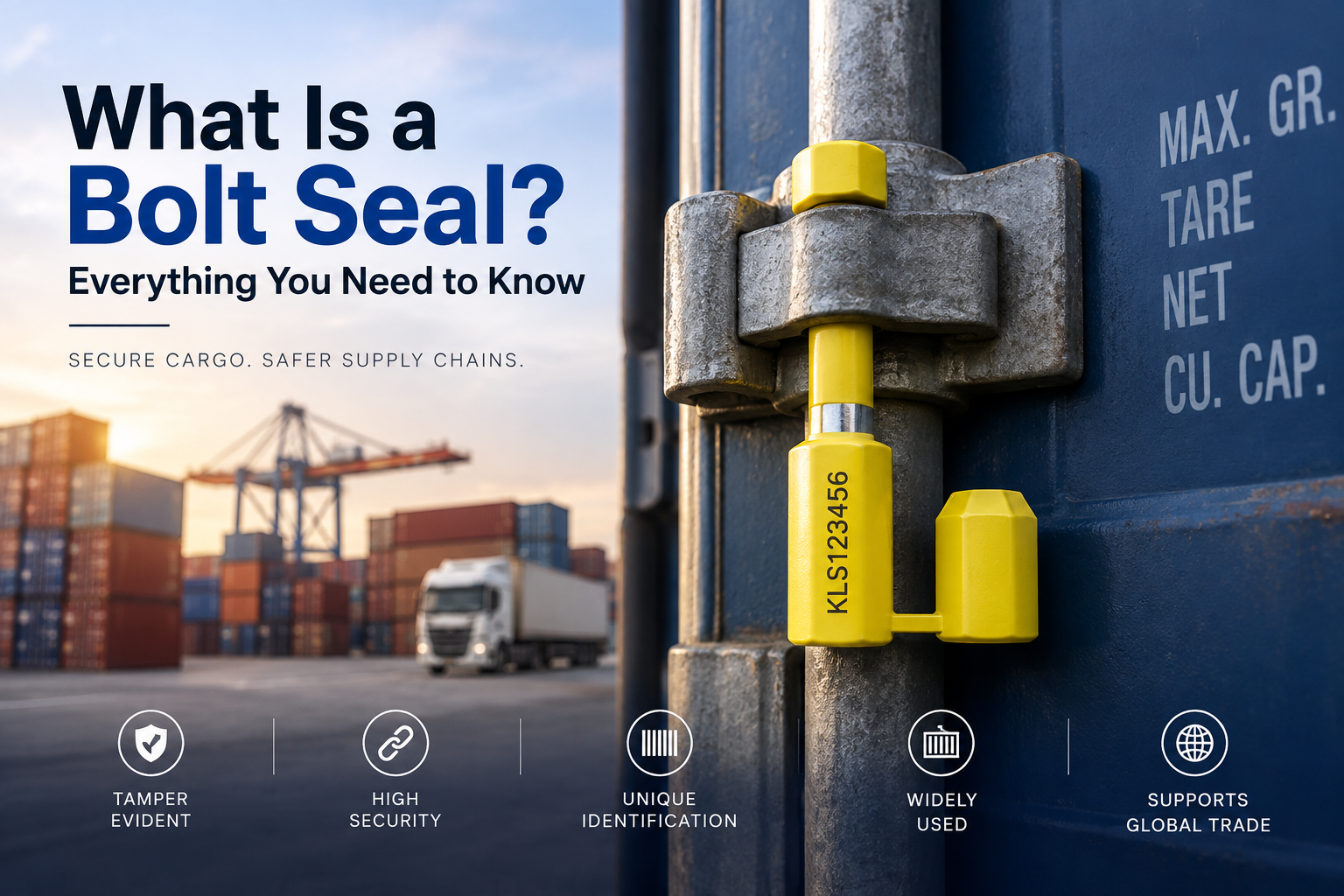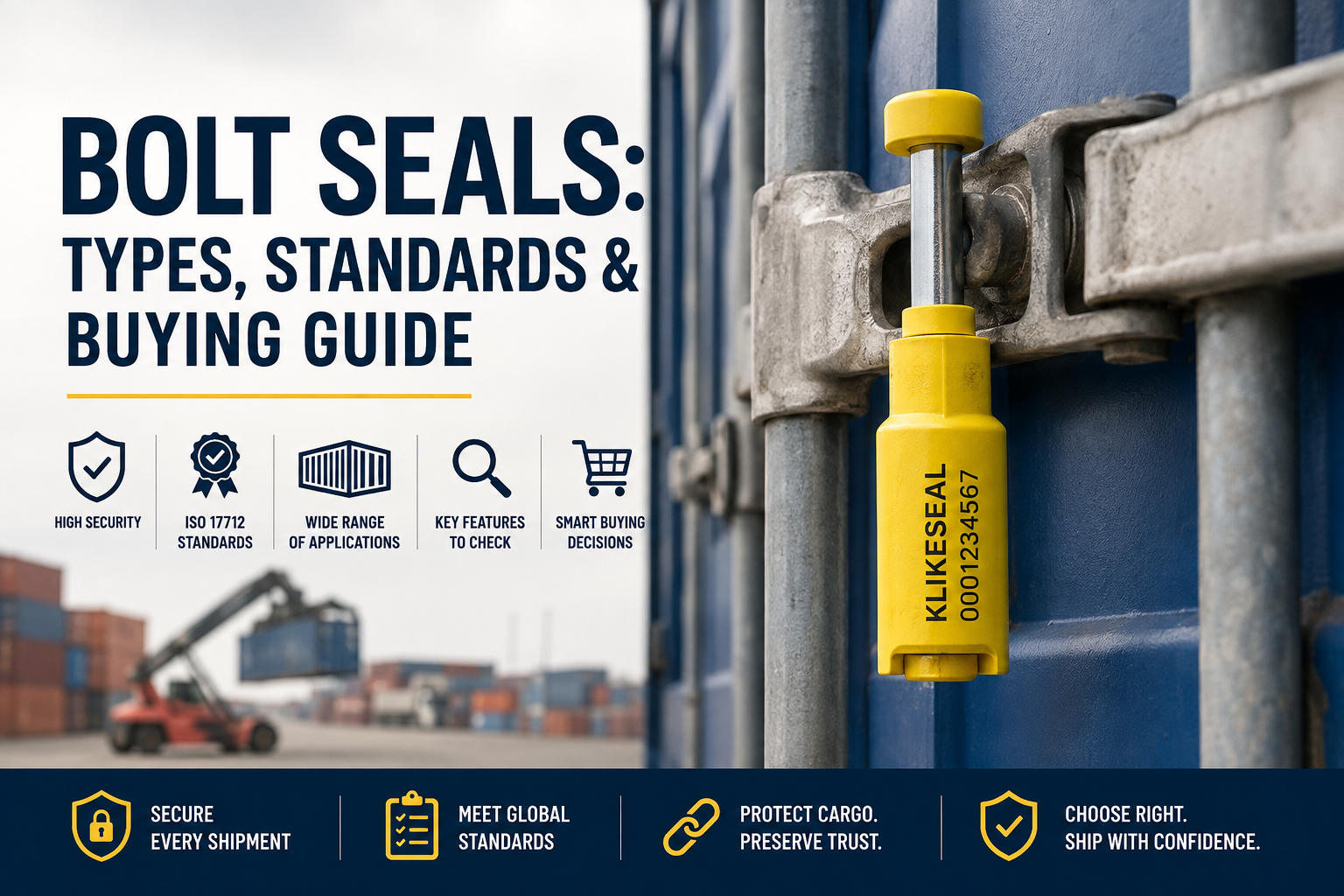

A bolt seal is a single-use mechanical security device used to secure shipping containers, trailers, and other cargo units. It combines a rigid bolt with a locking body and a unique identification number. High-security versions are designed to resist forced removal and provide visible evidence if the seal has been interfered with.
The right bolt seal is not simply the one that looks strongest. Your choice depends on the container hardware, security requirement, applicable standard, operating environment, and how the seal will be checked throughout its journey.
What Is a Bolt Seal?
A bolt seal has two main parts: a metal bolt or pin and a locking body. Once fitted, it is intended for one-time use. Removing it normally requires breaking or cutting the seal, leaving evidence that the original seal has been removed.
Its unique number connects the physical seal to the container and shipping records. That makes the seal part of a wider chain-of-custody process, not just a physical locking device.
ISO 17712:2013 covers mechanical freight container seals and establishes procedures for their classification and acceptance. The World Customs Organization also treats security seals as part of container integrity and custody controls.
How Does a Bolt Seal Work?
The process is simple:
- Load and inspect the container.
- Fit the bolt seal through the appropriate locking point.
- Record the seal number against the shipment or container.
- Check the seal and number whenever custody changes.
- Inspect the seal again at destination.
- Report any missing, damaged, or mismatched seal.
WCO guidance recommends visual inspection, comparison of the seal number with cargo documentation, and recording inspections during custody changes.
Types of Bolt Seals
” Bolt seal ” describes a format, not one universal security specification.
High-Security Bolt Seals
These seals are designed for applications where greater resistance to forced removal is required. ISO 17712 provides the classification framework for mechanical freight container seals. A product marketed as an ISO 17712 high-security seal should have supporting documentation for that specific product.
A metal bolt is not automatically a high-security seal. Classification depends on applicable requirements and tested performance.
Coated and Customized Bolt Seals
Polymer coatings can improve handling, visibility, or identification. Buyers can also request sequential numbers, barcodes, QR codes, company identification, or color coding to support shipment records and inventory control.
What Standards Apply to Bolt Seals?
Understanding ISO 17712
ISO 17712:2013 is the current published edition of the International Standard for mechanical freight container seals. ISO’s record shows that it was confirmed in December 2023. The standard establishes procedures for classifying and accepting mechanical seals used to secure freight containers in international commerce.
Indicative, Security and High-Security Classifications
ISO 17712 identifies three broad categories:
| Classification | Main Purpose |
|---|---|
| Indicative | Shows evidence of entry or interference |
| Security | Provides some resistance to intrusion |
| High Security | Provides greater resistance to forced entry |
Note: The WCO also identifies these three mechanical seal categories.
What Does ISO 17712 “H” Mean?
“H” refers to the High Security classification. Treat it as a performance classification, not a marketing label. Ask for documentation supporting the claimed classification for the exact product or model.
ISO Compliance vs CTPAT Requirements
ISO 17712 is a standard for mechanical freight container seals. CTPAT is a U.S. Customs and Border Protection supply-chain security program.
For applicable CTPAT highway carrier requirements, CBP states that high-security seals meeting or exceeding current ISO 17712 requirements must be used on qualifying loaded trailers or containers.
This does not mean every international shipment requires an ISO 17712 H-rated bolt seal. Requirements depend on the shipment, route, customer, carrier, security program, and jurisdiction.
Where Are Bolt Seals Used?
Shipping Containers
This is the most common application. Bolt seals secure compatible locking points on containers carrying goods by sea, road, rail, or combined transport.
Trucks and Trailers
Bolt seals are also used on truck and trailer doors. For qualifying U.S.-bound CTPAT cargo, CBP specifically references high-security seals and barrier bolt seals in applicable situations.
Rail and Cross-Border Freight
Suitable bolt seals can be used where closure hardware supports them. They are particularly useful when cargo passes through multiple custody points because the recorded seal number provides a reference for inspection.
What Features Should You Look for in a Bolt Seal?
- Tamper-evident design: Choose a design that makes unauthorized removal visible. Avoid calling any mechanical seal “tamper-proof.”
- Unique serial number: The identifier should be unique, readable, and easy to record.
- Material and strength: Construction should match the required security classification and operating environment.
- Traceability: Record the seal number alongside container and shipment information. WCO guidance recommends inspecting seals at custody changes and documenting discrepancies.
- Supplier documentation: For high-security seals, request relevant test or certification documentation for the exact product.
How to Choose the Right Bolt Seal
1. Match the Security Requirement
Consider cargo value, theft exposure, route, custody changes, and customer or regulatory requirements. Do not automatically choose the highest classification.
2. Check the Locking Point
Before ordering, check locking-hole size, alignment, clearance, door hardware, and available sealing location. A high-security rating is of little use if the seal cannot be correctly fitted.
3. Verify the Standard
Check whether ISO 17712, High Security, CTPAT, or another customer or local requirement applies.
4. Consider the Environment
Consider weather, salt air, chemicals, temperature changes, rough handling, and storage conditions.
5. Verify Numbering and Documentation
Decide whether you need sequential numbers, barcodes, QR codes, or custom identification. Then ask the supplier for documentation supporting the claimed classification.
6. Compare Total Cost
Look beyond unit price. Consider application time, traceability, replacements, and inventory management.
Bolt Seal Buying Checklist
- Confirm the application.
- Identify the required security classification.
- Check whether ISO 17712 applies.
- Verify any CTPAT or customer requirement.
- Check hardware compatibility.
- Confirm material and physical performance.
- Verify unique serial numbering.
- Check tamper-evident features.
- Request relevant test or certification documents.
- Compare total cost, not just unit price.
Specifying bolt seals for your shipping cargo?
Klik eSeal supplies ISO 17712 High-Security mechanical bolt seals alongside our advanced RFID and GPS electronic container seals. Protect container integrity across sea, road, and rail corridors.
Request a Klik eSeal QuoteCommon Mistakes When Buying Bolt Seals
Avoid assuming every metal bolt seal is high security, buying only on price, confusing ISO 17712 with CTPAT, failing to check container hardware, or skipping supplier test documentation.
Also avoid calling a seal “tamper-proof.” A strong seal cannot compensate for poor application, inspection, documentation, or chain-of-custody controls.
Frequently Asked Questions
What is a bolt seal used for?
A bolt seal is used to secure shipping containers, trailers, and other suitable cargo units. It provides a physical barrier at the closure point and evidence if the original seal has been removed or interfered with.
Are all bolt seals ISO 17712 compliant?
No. Not every bolt seal automatically meets ISO 17712. Verify the classification and supporting documentation for the exact product model.
What is an ISO 17712 H seal?
It is a mechanical seal classified as High Security under ISO 17712. Suppliers should provide supporting documentation for the specific product.
Are bolt seals required for shipping containers?
Not universally. Requirements vary by country, customs program, carrier, customer, cargo, and route. Some security programs require high-security seals meeting ISO 17712 requirements.
How do you choose the right bolt seal?
Start with the security classification, then check hardware compatibility, applicable standards, operating conditions, identification requirements, supplier documentation, and total cost.
Can bolt seals prevent container theft?
They can make unauthorized entry more difficult and provide evidence of interference, but cannot guarantee that theft or unauthorized access will never occur.
Conclusion
A bolt seal is a small part of a larger cargo security process. Its purpose is to help establish whether the original seal remains intact and give each custody point an identifier to check.
For buyers, start with the security requirement, confirm the applicable standard, check the container hardware, and verify supplier documentation. ISO 17712 provides the key classification framework for mechanical freight container seals, while CTPAT can add requirements for qualifying shipments.
Sources: ISO 17712:2013; World Customs Organization (WCO) Safe Framework of Standards; CTPAT Highway Carrier Minimum Security Criteria.